Showing posts with label racism. Show all posts

Friday, January 2, 2026

My best blog posts from 2025?

Best wishes for the New Year!

Here is a list of the posts that I wrote last year that I hope get the most interest.

 My articles on theology and science. I put together links to all the articles I have written over the last 25 years.

Participating in the greatest story ever told. This is review of Eat this Book, by Eugene Peterson.

A heartfelt reckoning with Australia's history of colonialism, racism, and Whiteness. This year was the beginning of my engagement with Stan Grant.

Living and Dying for your Country. This was a review of Patriot by Alexei Navalny, the late Russian opposition leader.

Science, Humanity, and Jesus. This is a talk I gave at Theology on Tap in Brisbane.

Genesis, Science, and Jesus. A short talk by John Dickson that was part of an episode of his podcast, Undeceptions.

In Praise of Papua New Guinea

Monday, August 18, 2025

The centrality of marginality to Christian theology and life

This month at the theology reading group, we are discussing Marginality: The Key to Multicultural Theology by Jung Young Lee.

How do we make sense of our life experience in terms of theology? How do we make sense of theology in terms of our life experience? Given our humanity (finitude and egoism), it is impossible to completely separate our theology and our experience. Will they enrich or distort one another? Previously, I have written about the challenges of contextual theology.

Jung Young Lee was born in North Korea in 1935, escaped to South Korea during the Korean War, and immigrated to the USA as an undergraduate student. He then worked as a librarian, obtained a Ph.D., taught in a secular university, became a minister in the United Methodist Church, was active in its Korean-American congregations, and became a Professor of Systematic Theology at Drew University. Over the years, he experienced racism, prejudice, and stereotyping as an Asian-American.  Not feeling he belonged in the USA, he returned to South Korea at one point with the intention of staying. However, he discovered that he felt he no longer belonged there either.

Lee makes sense of his life through three lenses: historical, sociological, and theological. He recounts the historical experience of immigrants to the USA from Japan, Korea, and China, beginning in the nineteenth century. It is a sad and disturbing history of exploitation, discrimination, and humiliation. He discusses the sociological concept of marginality that was introduced to describe the "integration" of immigrants into the American "melting pot." He contests some of these definitions as they are developed by those in the centre and assume that being on the margins is bad and that the marginalised should move towards the centre. The centre is characterised by a concern with "wealth, power, and glory." (page 31)

"Immigration is the most vivid and profound symbol of marginality for us." (page 110).

Lee claims that "Theology is autobiographical so I reflect on my praxis and context." (page 33).

Lee discusses how marginality is central to the Biblical narrative. The Tower of Babel "was the symbol of centralisation" (p. 110). 

Lee suggests that in Old Testament narratives there are three acts (p,111). 

1. God's call to be a marginal people

2. Faith

3. "The promise which includes  receiving land, becoming a powerful nation, and making a great name (Genesis 12:1-9)."

"These three acts are inseparable. The first and third acts seem to contradict one another, but they are connected in the second act. The order of these acts cannot be reversed.... Tragedies in the history of Judaism and Christianity were due to the reversal this order... The coexistence of both marginality (the first act) and centrality (the third act) is possible in faith (the second act), the connecting principle..."

There is a dialectic. It is both/and rather than either/or.

God called Moses from his marginal status to lead the Israelite slaves out of Egypt. They wandered in the wilderness for forty years. Jesus was born in a stable, the son of a teenage unwed woman, and grew up in Galilee. In the wilderness, he resisted the temptation to embrace "wealth, power, and honour." He was scorned by the centre: the local religious and political leaders. The focus of his ministry was on the marginalised: the poor, sick, ritually unclean, hungry, lame, beggars, prostitutes, and tax collectors.  Jesus' death on the cross was the ultimate symbol of marginalisation. His disciples were not drawn from the social, political, or religious elites.

Humility, service, and love are the dominant characteristics Jesus said his followers should have. The early church did this and lived on the margins. Yet, following Constantine and the rise of Christendom, the church embraced centrality and scorned marginality. It was characterised by wealth, honour, and power. Today, the church, in all its diverse forms, still aspires to centrality. It is hierarchical, bureaucratic, and exclusive. Dogma does not recognise multiple shades of grey. (p. 125) "Centralism is the cardinal sin that destroys the authentic church." (p.142)

Lee presents a radical alternative vision for the church, including for seminaries. He argues that cell groups should be the core structural element of the church. Structures should be characterised by flexibility, local autonomy, and informality.

I have sympathy for his proposals, but sometimes I find he is idealistic and overly optimistic. Some of his proposals may work for a marginalised community such as Korean-Americans (who tend to be disciplined, well-organised, and highly educated). However, for groups of people such as the homeless and those with addictions or traumatic backgrounds, it is extremely challenging for them to develop structures and leaders. Such challenges are helpfully described in an earlier post by my wife, Robin.

On a personal level, I found the book challenging and discomforting. I am a child of the centre, in terms of family background, race, education, wealth, social status, and profession. Most of my life, I have been involved in churches and ministries that value and focus on centrality and marginality. This has not involved a blatant seeking after wealth, power, and honour. It has been much more subtle and subconscious, reflecting the surrounding culture and background of the participants and leaders. Too often I have been attracted to the centre and seduced by it. Only over the last fifteen years, I have a moved to a more marginal outlook and focus, stimulated by experiences in the Majority World. Yet the pull back to the centre is there day after day, particularly towards comfort, safety, and predictability.

The orientation and main messages of the book are largely not new to me. Nevertheless, it is a message I need to keep hearing. Lee's description of the immigrant experience, both his own and his historical predecessors, increased my imagination and empathy towards the immigrants I interact with. He gives seven characteristics of the experience of marginality: rejection, humiliation, alienation, loneliness, nothingness, allness, and a vision of new life.


Monday, July 21, 2025

A heartfelt reckoning with Australia's history of colonialism, racism, and Whiteness

Life experiences shape us, for better or for worse. They can be rich, meaningful, and beautiful. They can be awful and scar us for life. Much of our experience is shaped/determined by the family, culture, and moment we were born into. 

Both Stan Grant and I were born in Australia in the early 1960s and went to high school in the Canberra suburb of Belconnen. Besides, living many years outside Australia, perhaps that is the sum total of our common life experience. He has been successful as a journalist, both internationally and in Australia.

Stan Grant is a Wiradjuri man. His grandparents' home was bulldozed by the Police with the authority of the British crown. His family was dirt poor, always lived on the fringes of towns, and moved continually as his father sought itinerant work. He never stayed in one school for more than a year. No one in his family finished high school, let alone attended university. He says his family was characterised by love. His grandfather fought for Australia in World War II, but when he returned, he was not allowed to go to the local pub to share a drink with his mates. Other returned soldiers were entitled to housing. His grandfather was not. Family members were often harassed by the police. One was put in prison for speaking his native language. Until his family moved to Canberra when he was a teenager, most of his peers were indigenous.

In contrast, I spent the first 22 years of my middle-class life in the same house, my father had the same job that whole time,  both my parents had a Ph.D., and the schools I attended were "lily white".

Literature can be powerful because it can create empathy. It can help us see and feel the world through the eyes and experiences of another person. Incidentally, this is one argument for the importance of the humanities and a liberal arts education. 

Grant is a gifted writer, and his book, The Queen is Dead gave me a glimpse into a world so different to my own, even though it is spatially close and overlapping. The emotions I experienced included sadness, confusion, shock, anger, embarrassment, powerlessness, despair, frustration, and guilt. I guess that my emotional responses are tame and transient compared to the raw emotions that Grant lives with, day in and day out.

Most chapters begin with the refrain. "The White Queen is dead."  The book is prompted by the death of the British monarch in 2023. It is not about her as a person. "The White Queen is a metaphor". (page 9). The book is a personal reckoning with the legacy of colonialism and racism in Australia.

"How do we live with the weight of history? How do we not fall prey to soul-destroying vengeance and resentment, yet never relent in our righteous demand for justice?" (page 5).

Reflecting on his and others' response to the death of the White Queen, he states:

"And in my anger I am confronted again by the two consuming questions of my life: what is Whiteness? And what is it to live with catastrophe?" (page 54)

While in primary school, a white student asked Stan, "Why are you so Black?" (page 84). This incident has tormented him his whole life, and he keeps coming back to it in the book.

Grant reflects painfully on public events over the past quarter of a century that have attracted media attention and have a racist dimension. This includes the significance of the Sydney Olympics in 2000 for Australian identity, Cathy Freeman's gold medal in the 400 metres at that Olympics, the abuse of footballer Adam Goodes, the sponsorship of the Australian women's netball team by Hancock Prospecting, Hawthorn Football Club's treatment of indigenous players, and  Grant's experience working for and eventual departure from the public broadcaster ABC News. He helped me see these events in a raw and painful way.

Grant provides a helpful critique of modernity and the Enlightenment. White men "invented modernity as a place of endless possibility." (page 19). The freedom promised often degenerated into tyranny. Modernity provided an intellectual framework and justification for racism and colonialism. 

"Identities can nourish us. They can give us community. Identities can give us voice. That notion of identity is a conceit of the West - identity as freedom. But identity can also - and far more often than not, in fact - be a pathway to tyranny." (page 23).

"Modernity has supplanted god with its own faith in progress and reason. The liberalism that emerged out of the seventeenth- and eighteenth-century Enlightenment imagines that we can wash ourselves clean of the past. But there can be no redemption without atonement." (page 214)

We discussed the book this month in the theology reading group. At first glance, the book might not appear to have much theology, particularly if you read the publisher's blurb

Grant dedicates the book :

To Baiame, my creator

To Jesus Christ, my saviour

To Yindyamarra, the Spirit

"Vindicate me, O God. And plead my cause against an ungodly nation" (Psalm 43:1)"

Theological allusions are scattered through the book. Two short sections (pages 207-211 and 272-278) focus on theology. He engages with Simone Weil, the mystic who had a strong solidarity with the oppressed, and Miroslav Volf.

The first section reflects on his experience of church while growing up. A similar reflection is in a beautiful and powerful article, “This is the way healing begins”: Recovering the language of lament in a disenchanted age 

"For me, Easter is not a time of resurrection. I don’t rush to Easter Sunday but dwell in the darkness of Holy Saturday — the day after the crucifixion, when those closest to the crucified Christ shivered in fear. On that day there is no promise of tomorrow. There is no hope. It is the day when faith itself feels destitute.

It was the darkness of Holy Saturday that I felt — deep in my bones — when I was a little boy. I felt it in the church on the mission on the outskirts of Griffith in New South Wales that was a home, spiritually and physically, to my family. It could have been any of the missions scattered across our country. The places to which we were banished, and yet managed to find refuge.

There was a tiny wooden church on the mission. I remember cramming into the pews, with my best Sunday clothes on and my hair spit down.

My uncle was the pastor. He was an old-time fire-and-brimstone preacher. Not long into his sermon, his white shirt would be stained with sweat. He would constantly mop his brow with a handkerchief. He clutched a tattered black leather-bound copy of the King James Bible under one arm, yet never needed to read from it. He could recite the scripture from memory. With his other arm he would point. Each word landing — and I felt always landing on me.

My head would ache in that church. I would twitch and look out the window. I felt a heavy weight in that church. I have felt it in other black churches, places where our people come to worship. We pray differently. We sing differently. Our hymns are songs of sorrow...

Ours, you see, was the church of the forsaken.

Why, you may be wondering, am I talking about God, about the church, about Christianity? Is that not the religion of empire? Isn’t Christianity the legacy of colonisation? Certainly since the time of the conversion of the Roman emperor Constantine, Christianity has been wielded as the divine right of kings. It has interwoven itself with power and tyranny.

Yes, those proclaiming the word of God came to this land with a Bible in one hand and a gun in the other. The doctrine of discovery, of terra nullius, was itself a sort of decree — that any land not belonging to a Christian monarch was free for the taking.

Yes, God sat astride empire. But that was not our God. That is Christendom, not Christianity. God did not arrive here with the first fleet. We knew God. We walked in God’s creation, in the land that God had given us. We told stories to God. We painted God on our rocks and on our bodies. We had our word for God: Baiame.

When we heard the stories of Jesus, we heard the story of a dark-skinned man in a land of empire. Oppressed and colonised. A tribal man. We heard the story of someone speaking back to power. We heard the words of an ancestor. And in the crucifixion. We felt the wounds. We felt the shame. We felt the abandonment."

This is how theology should be done: personal and contextual, rather than impersonal and abstract. 

Stan Grant writes some wonderful columns every fortnight for The Saturday Paper. There is also a beautiful episode, "Disenchanted Age" of the Undeceptions podcast, where he is interviewed by John Dickson.

Friday, January 5, 2024

Grief, truth telling, prophetic imagination, and social change

I recently watched the movie Till with my family. It recounts the tragic death of Emmett Till, a fourteen-year-old African American, who was lynched in Mississippi in 1955. Two men were charged with murder but acquitted at their trial. Later the two men confessed to the killing in a paid interview for a magazine article.

Most of the movie is about the grief of Till's mother, Mamie Till-Bradley, and how this drives her to activism with the NAACP and energises the campaign for civil rights. A key event is Mamie's courageous decision to view the tortured and battered corpse of her son, and then to demand a funeral with an open casket, so others can see what happened to him.


By coincidence, I am currently reading The Prophetic Imagination by Walter Brueggemann. Its themes and ideas resonate with the movie.

“The task of prophetic ministry is to nurture, nourish, and evoke a consciousness and perception alternative to the consciousness and perception of the dominant culture around us.” - page 3

The consciousness of the southern USA [and Australia] in the 1950s was that non-whites had no civil or voting rights and that they should accept the system as it was. Nothing was going to change. Entrenched powers created, maintained, and enforced this social reality and consciousness. This consciousness can be identified with what Brueggemann calls the "royal consciousness", that was created, maintained, and enforced by kings of Israel, beginning with Solomon. 

In the 40th Anniversary edition, Brueggemann reflects.

 “I would now alter ‘royal consciousness’ to ‘totalism’...The term ‘totalism’ refers to a socio-ideological arrangement in which hegemonic ideology takes up all the social space and allows for no alternative possibility. Its claim is ‘total’!” 

A key dimension to this "totalism" is that it leads to a numbness about death.

"What I propose is this: The royal consciousness leads people to numbness, especially to numbness about death. It is the task of prophetic ministry and imagination to bring people to engage their experiences of suffering to death." (page 41)

Mamie did this. 

Thursday, November 16, 2023

What do Dietrich Bonhoeffer and Martin Luther King Jr have to do with one another?

This month at the theology reading group we are discussing Bonhoeffer and King: Their Legacies and Import for Christian Social Thought. It is a volume of eighteen separate essays and edited by Willis Jenkins and Jennifer M. McBride.


Martin Luther King Jr. and Dietrich Bonhoeffer lived at different times and in different contexts. Bonhoeffer lived, wrote, preached, resisted, suffered, and was executed in Nazi Germany in 1945. King lived, wrote, preached, resisted, suffered, and was assassinated in a racially-segregated USA almost a quarter of a century later, in 1968. Coincidentally, both were killed at the age of thirty-nine years and four months. Both took a stand against injustice and resisted tyranny, ultimately at the cost of their lives. Both were completely driven by their theological convictions, with a focus on costly and radical discipleship, and the Sermon on the Mount.

Both had communitarian perspectives on life and politics. Here is an example, from King.
“In a real sense all life is inter-related. All men are caught in an inescapable network of mutuality, tied in a single garment of destiny. Whatever affects one directly, affects all indirectly. I can never be what I ought to be until you are what you ought to be, and you can never be what you ought to be until I am what I ought to be... This is the inter-related structure of reality.” 
 Martin Luther King Jr., Letter from Birmingham Jail

Note, that this mutuality resonates with the apostle Paul's perspective on the church as the body of Christ, as described in Romans 12 and 1 Corinthians 12:25-26:
But God has put the body together, giving greater honor to the parts that lacked it, so that there should be no division in the body, but that its parts should have equal concern for each other. 26 If one part suffers, every part suffers with it; if one part is honored, every part rejoices with it.
Although there are similarities between King and Bonhoeffer, there are some significant differences. Foremost, Bonhoeffer as a Gentile and a child of privilege had the freedom to choose to take the path of suffering. In contrast, King and his forebears did not have a choice. Suffering was forced on them because of the colour of their skin. They were enslaved, beaten, lynched, discriminated against, and denied civil and voting rights. Yet in that enforced circumstance they had the choice to take the path of the cross, to suffer with dignity, to forgive their enemies, and to turn the other cheek (page 158).

A second difference was their theological perspective, including their interpretation of the Bible. King embraced his education in liberal Protestantism, claiming it more "rational", sometimes distanced himself from orthodox belief, and interpreted much of the Bible in terms of the social gospel. Bonhoeffer had a higher view of Scripture and embraced orthodox creeds. Note Bonhoeffer was against the tide of his time, when Germany was awash with higher criticism and liberal theology. Although, Karl Barth was a kindred spirit.

Both were preachers who carefully crafted sermons with aesthetic appeal and anchored in Biblical texts, metaphors, and theology. There is a nice chapter on "Preaching and Prophetic Witness," by Raphael Warnock, currently pastor of the last church that King pastored, and recently elected to the USA Senate.

A chapter, "King and Bonhoeffer as Protestant Saints," by Stephen Haynes, ends by quoting the first two stanzas of the poem, "A Dead Man’s Dream" written by Carl Wendell Hines Jr. as a tribute to King.
Now that he is safely dead,
Let us praise him.
Build monuments to his glory.
Sing Hosannas to his name.

Dead men make such convenient heroes.
For they cannot rise to challenge the images
That we might fashion from their lives.
It is easier to build monuments
Than to build a better world.

So now that he is safely dead,
We, with eased consciences will
Teach our children that he was a great man,
Knowing that the cause for which he
Lived is still a cause
And the dream for which he died is still a dream.
A dead man’s dream.

Tuesday, January 24, 2023

Seeing transcendence in people and in science

“I’m no longer interested in other worlds or spiritual planes. I’ve seen enough in a mouse to understand transcendence, holiness, redemption. In people, I’ve seen even more.

Once every few months of whenever the mood strikes, I take the long way home from the lab I run in Princeton just so I can step into that church… I never bow my head. I never pray, never wait to hear God’s voice, I just look. I sit in blessed silence, and I remember. I try to make order, make sense, make meaning of the jumble of it all. Always, I light two candles before I go. 

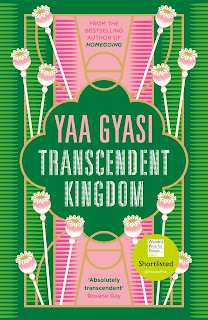
These are the final reflections of the main character, Gifty, at the end of the wonderful novel, Transcendent Kingdom by Yaa Gyasi

Gifty is a graduate student in neuroscience at Stanford, who at the end of the novel is a Professor at Princeton. Her parents immigrated to the U.S.A from Ghana and she grew up in Alabama, just like the author. Gifty's choice of research topic [which involves experiments on mice] is motivated by her life experience including her brother's struggle with drug addiction. 


The narrative naturally engages with a wide range of issues, including the immigrant experience and the associated prejudice, racism, poverty, dislocation, and alienation that are too often encountered. It considers family relationships, particularly the bond and tensions between a mother and an adult child. It gives a picture of what it may be like to be a young woman of colour in an elite institution. Then there is sexuality, white Pentecostal churches in the USA, science and religion, mental illness, drug addiction, a personal face on the opioid crisis, and the philosophy of neuroscience, including the mind-brain problem,... This does seem like a long list of issues but the author manages to engage with them in a natural and meaningful way as part of a coherent narrative.

Although transcendent is in the title, there is not much explicit discussion of it in the novel. Nevertheless, I find it fascinating that transcendence is where it ends.

Wednesday, June 22, 2022

Cooking up meaningful relationships

Last weekend my wife and I went to the movie theatre to see, The Kitchen Brigade, a feel good French movie. A gourmet chef loses her job because she cannot get along with others, particularly a pretentious and demanding restaurant owner. The only job she can get is in a canteen, cooking for a group of young African men, who are in France with precarious legal status. The movie is quite funny, the characters are endearing, and it builds empathy for the plight of refugees and immigrants. Some might consider there are elements of the "white saviour" genre trope. On the other hand, the redemption that occurs is mutual.


A while back we also enjoyed watching the movie Mostly Martha. It is also quite funny, celebrates food, makes you hungry, and highlights that relationships matter.


I had a feeling of deja vu watching the movie. I was pretty sure I had seen it before. Well not quite, my daughter pointed out that there is a Hollywood version, No Reservations. I had seen that one.

Wednesday, March 9, 2022

Living out the Gospel while immersed in a neighbourhood in a secular city

Last week at the theology reading group we discussed Forming Christian Communities in a Secular Age: Recovering Humility and Hope by Tim Dickau.

Three narratives are inter-weaved throughout the book: the personal, the congregational, and the socio-structural. Dickau describes his recent recovery from burnout and alcohol abuse after three decades as pastor of Grandview Church in Vancouver, Canada. During this time the church moved from a declining "commuter" church to a vibrant and creative community that was engaged with and in solidarity with its local neighbourhood. This led to significant relationships with marginalised neighbours, including the homeless, refugees, and the poor. In collaboration with local community organisations, the church birthed several social enterprises, including converting the church parking lot into a low-income housing project. 

The more theoretical dimension of the book is the analysis of the social secular character of large cities in the Western world. Here there is substantial engagement with the philosopher Charles Taylor and his books, This Secular Age (2007) and Sources of the Self: The Making of the Modern Identity (1989). Dickau also engages with the theologians William Cavanaugh and Willie James Jennings.

With regard to secularism, it is important to be clear on terminology. Taylor considers three distinct forms of secularism, focusing on the third form.

Moreover, both belief and non-belief have become optional, contested, and pressured so that believers and non-believers alike are “fragilized,” where expressions of both belief and unbelief are regularly challenged and therefore not as

certain (20–27). In this new age, we all live with “cross-pressures”

(15), where any believer, atheist, or anything in-between will be challenged by sensible people who think differently

Taylor defines the social imaginary as “. . . the way ordinary people imagine their social surroundings, and this is often not expressed in theoretical terms, it is carried in images, stories, and legends.” (172).

The social imaginary for this secular age is an immanent frame that by assumption precludes any role for transcendence. Dickau helpfully calls this "functional atheism," suggesting that today many clergy and church members operate within a framework where everything is framed, even if subconsciously, in terms of human action. This is reflected in church "business" meetings, strategic plans, policies and procedures that are strikingly similar to those of modern business corporations. 

I greatly appreciate this book. Dickau embodies honesty and humility. It is written by someone who has spent decades in the trenches and does not shy away from the complexity and messiness of life, ministry, mission, community, politics, and relationships. Dickau is able to weave the three narratives (personal, communal, socio-structural) together with some synergy, as each one increases the credibility of the others.

I found three ideas in the book personally challenging. The greatest challenge was realising the extent that which I operate in an immanent frame. Too often I am a functional atheist.

The discussions about racism draw on the writing of Willie Jennings and Grandview's engagement with First Nations people issues locally and nationally. I need to wrestle with this issue more.

Dickau advocates a commitment to place, i.e., a local neighbourhood. This stability is counter-cultural and necessary for lasting change. Will I make such a commitment? My wife and I are aiming for that through our involvement with Village Mosaix, as part of Village Church in Brisbane.

Here are some specific things that I appreciate about the book.

a. Dickau's honesty and vulnerability could be a wake-up call for many church leaders. Many tend to "workaholism" and some congregations enable this. These issues resonate with those identified by Pete Scazzero in Emotionally Healthy Church. 

b. The descriptions of Grandview activities provide concrete models that may inspire other churches to emulate, provided there is sufficient adaptation to local context. Dickau stresses this latter point. I was inspired by the account of how the activities of Kinbrace in refugee advocacy did not just help some in the local neighbourhood but eventually led to changes in Canadian government policies and procedures.

c. Seeking the welfare of the city. Seek the common good. Dickau is inspired by Jeremiah 29. This goes against the natural tendency of churches to be like most human institutions and to be parochial and inward-looking. [Although I agree with the conclusion, I would like to see this concern with the common good, justified by some New Testament passages.]

d. Practical care for the marginalised.

e. Grandview fosters creativity. This is done by tapping into the energy, gifts, experience, and passions of the laity.

f. Respect for tradition without slavery to it. Grandview is a Baptist church, but was once characterised as "Bapto-Catholic". It does not appear to be constrained by narrow denominationalism.

g. Beyond an individualistic Gospel and mission. Confession, repentance, and action need to be at the individual, corporate (congregational), and systemic levels. This is integral mission. I appreciate this for two reasons. Foremost, this is how mission is presented in the Bible, from ancient Israel to the early church, as nicely documented by Chris Wright. Second, as a scientist who studies emergence in complex systems, I often argue that issues, whether mental health or poverty alleviation, must be addressed at multiple levels, from the individual to the societal.

Although there is much to admire about the book, here are a few reservations.

Is the book too Taylor-centric?

I am no expert on Taylor, having only read the potted version, How (not) to be secular by James K.A. Smith. I greatly admire Taylor, particularly because as a distinguished academic, A Secular Age, has created waves in the academy, particularly in the humanities and social sciences. Nevertheless, I have many questions and concerns about Taylor and the amount of authority he is given. Taylor is a philosopher, not a historian or a social scientist. I wonder whether the historical narrative is really as simple as he presents. Similarly, I wonder if secularisation is actually thicker, more complex, and diverse than Taylor presents, particularly when one considers multi-cultural neighbourhoods. As a Catholic, does Taylor lay too much "blame" on the Reformation for fostering secularism and destroying enchantment? 

Is Taylor wistful for a former age, such as Christendom? Does his work foment the desires of those who pine for an earlier age that actually may never have existed? Does it feed the fantasies of those who want to "Make America Great Again"?

Arguably, secularisation, in some of its forms, is not always bad. Sometimes maybe it is the best, albeit imperfect, solution to a complex problem for democracies in pluralistic societies. It has kept at bay religious wars, theocracies, and kept pseudo-sciences such as young-earth creationism and Vedic "science" out of public school systems.

Given these concerns is Taylor really essential to the arguments of the book? Could we get to the same point as Dickau, with regard to missiology and ecclesiology, by just going back to the radical teachings of Jesus and the radical lifestyle of the early church? In some ways, Dickau does head in this direction when he discusses the potential of the "new monasticism" movement.

A problematic identification of "the powers of this dark world"?

Two thousand years of church history might suggest that Christians are not good at cultural analysis, particularly with regard to identifying what elements of their current culture is a result of the work of God's Spirit, or of Satan, or of human rebellion, or the "spiritual forces of evil." Perhaps indicative of the lack of nuance is the three options presented by Reinhold Niebuhr in his highly influential Christ and Culture: Christ in Culture, Christ against Culture, and Christ above Culture.

Dickau identifies the following "powers of our secular age": individualism, consumerism, economic globalisation, racism, inequality, and the human-induced climate crisis.

I agree that all of these are important issues. I am very concerned about each and all can embody evil. But, I am nervous about having a completely negative characterisation of the first three "powers." Subtlety is needed. For example, consider globalisation. I agree that globalisation has had many negative consequences. But, one can argue that it has lifted hundreds of millions of people, especially in India and China, out of poverty. I do lament the corrosive effect of individualism on the West. However, it's opposite, communitarianism can also have negative effects. Consider a young Asian woman is living in the West. She may be positive about the individual freedom she has to change her religion, choose her spouse, and employment.

The Bible presents an ambivalent picture of money, sex, power, authority, freedom, knowledge, speech, and emotions. They are neither intrinsically good nor evil. Thus, it is reasonable to be ambivalent about culture and institutions, whether in science, technology, government, education, military, or business. Each can be a good gift from God that can be used to bless others. Each can also be distorted and twisted by sin (individual, corporate, and structural). They can then be used as instruments of violence, oppression, slavery, and idolatry.

Charles Ringma pointed out to our group that Karl Barth was ambivalent about the nation-state. Perhaps this is surprising because Barth experienced the nation-state in the evil form of Nazi Germany.

There is an essay "Karl Barth’s theological politics", by David Haddorf, that was published as a new introduction to Community, State and Church: Three Essays, by Karl Barth. Haddorf states.

Barth develops a political perspective based entirely upon God’s action in and through the revelation of the Word of God. His commitment to the word of God led him to be a dialectical thinker moving between absolute Yes and No, between absolute positive or negative views of the state, between absolute Christian claims of the legitimacy of the state and anarchial denial of legitimacy, between Marxist socialism and free-market capitalism, and between right-wing nationalism and left- wing revolutionary politics.

Similarly, I embrace a good-bad dialectic with regard to much that our complex world presents. Holding the concepts of Creation and Fall together presents a paradox. They must be held in tension. On the one hand, the created world is good. On the other hand, it is corrupted and “groans for redemption.” (Romans 8:19-22). This is a world of sin, death, disease, natural disasters, and of altruism. Common grace is everywhere. On the one hand, humans bear the image of God, including innate rationality, relationality, morality, and spirituality. On the other hand, this image has been marred by sin. Paul’s personal moral struggles (Romans 7:23) also reflect the human paradox. It requires great wisdom and discernment to correctly identify any specific human activity as a power aligned with the forces of darkness.

Unfortunately, hard copies of the book are only available in Canada. I do hope this will change soon as the book deserves a global readership. Electronic (Kindle) copies can be bought on Amazon.

To complement reading the book I recommend an interview with Dickau in a recent podcast episode.

Wednesday, January 27, 2021

An integrated perspective on life

Yesterday was a public holiday, known as Australia Day. January 26 marks the arrival of British settlers in 1788. It has been suggested that the day should be called Invasion Day. Since the British settlement, the indigenous people have suffered immensely from numerous atrocities. Unfortunately, much suffering continues today. With regard to health, poverty, education, substance abuse, incarceration, and discrimination, there are massive gaps between the indigenous and non-indigenous populations. For Christians, this suffering presents a significant challenge. We are to pursue reconciliation, justice, and mercy.

On the eve of January 26, my family attended an excellent (virtual) event, #ChangeTheHeart, organised by Common Grace. You can watch it here.

I want to note something that I found striking: the integrated perspective about life held by indigenous communities. My new awareness reflects (ashamedly) my ignorance. Different cultures have different values, traditions, and ways of thinking and doing. It is fascinating and helpful to have the privilege of having a window into other cultures. It can make us more self-aware of our own culture, including our own biases, prejudices, and assumptions. For those who follow Jesus, this is particularly important because the Kingdom of God transcends all cultures. Unfortunately, Christian institutions and individuals (including me) have a very checkered history of conflating their own culture with Christianity.

Over more than 65,000 years Aboriginal people developed a strong affinity for the land, sensitivity to the rhythms of nature, and a strong sense of history, extended family, community, and spirituality. In almost every sense these orientations go against the values of modern Western society which is oriented around capitalism, individualism, the future, rationalism, technology, and secularism.

Indigenous communities have an integrated view of life, that developed over hundreds of generations. They do not separate economics, politics, ethics, law, community, and the environment. This holistic perspective is something that the Western world is very slowly coming to awareness of. One concrete example is the push for ESG investing, where investments are not made solely on the basis of profit but bring Environmental, Social, and corporate Governance criteria into investment decisions. The covid-19 pandemic has accentuated a general awareness of the interconnectedness of things, such as public health, the economy, government, business, and education. Most essential workers are paid minimum wages! We are not completely isolated independent autonomous individuals who determine our own destiny. Our well being is very dependent on that of others.

I look forward to learning more and hope and pray that Australia will seek reconciliation with and justice for the original custodians of the land that we now call Australia.

Sunday, January 26, 2020

Australia day reflections

Today is Australia Day, the public holiday that marks the arrival of the British in 1788. As a Christian, here are two resources that I found particularly helpful and challenging.

Preaching on Australia Day? by Peter Adam
This article contains a prayer that I will be reading at church today.

What This Aboriginal Christian Wants to Tell the Church About the Australia Fires


Friday, November 15, 2019

Token justice

Every now and then I read just a sentence or two that has a big impact on me. About a year ago I read the following.
The danger of any educational institution rooted in progressive values but dependent on big money is the default to political correctness as a substitute for a broader liberalism — the promotion of economic equity. You cannot rail against an unfair tax system when you rely on those who benefit from it, but you can patrol offensive speech and innuendo in the name of moral compassion; you can reward unease and grievance as rectitude.
This quote is taken from a New York Times article
Someone Went Too Far at Friends Seminary, but Who?
It describes a bizarre controversy at a wealthy prestigious high school in New York City. A quirky Jewish mathematics teacher was fired because as a joke he made a Nazi salute when trying to illustrate obtuse angles.

For context, the school was started by the Quakers (Friends). Annual tuition is US$41K.

Generally, the trajectory seems common with institutions that are founded by Christians with a distinctly Christian vision and ethos. This leads to ``success'' that then attracts the wealthy and powerful who use the institution to advance their own interests.  Even more broadly, this evolution is common in institutions.

Wednesday, October 16, 2019

How is sin emergent?

One of the most exciting books I have encountered recently is
The Emergence of Sin: The Cosmic Tyrant in Romans by Matthew Croasmun.
It is based on the Yale Ph.D. of the author.
[At US$75 the book is rather expensive! Fortunately, I could read an electronic version through the UQ library].
I have a longstanding interest in how the concept of emergence is relevant to the dialogue between science and theology.

My son made me aware of the book, through a podcast from the Bible Project [who make cool videos summarising books of the Bible] with the author.  The podcast is an excellent introduction to the book.

What is sin? How should it be defined? A simple and common definition is something like ``sins are individual acts which involve disobeying God's commandments". Another is that ``sin is part of the human condition: our intrinsic disposition to do what we want rather than what God wants". But, is sin also something even greater, a cosmic force?
Corruption is sin. But, is corruption just the choices of individuals or is it something larger, a social force in some societies that carries people along and is something far greater than just small decisions by individuals? This is the idea of structural sin, that is particularly highlighted in liberation theologies. What does the Bible actually say?

Paul's Epistle to the Romans is one of the great treatises on sin (and redemption through Christ). Croasmun focuses on the puzzles presented by Chapters 6-8,
In Romans 5–8, Sin struts on the stage of the text like a personal being. The “data” are clear on this point. The noun ἁμαρτία (sin) is used as the subject of an active verb no fewer than eleven times in this brief passage. To summarize the familiar language, in these chapters, ἁμαρτία exercises dominion (5:21, 6:12), seizes opportunities to produce covetousness and kill (7:8, 11), revives (7:9), and acts in place of the human agent in whom it dwells (7:17, 20). The noun ἁμαρτία is deployed in personal terms in these chapters. This is not disputed. The question is, rather, whether this constitutes literary “personification,” or whether we have instead what we might describe as “person identification.”
I like the discussion of racism (chapter 3) as an example of the questions explored. There is a famous mathematical model for racial segregation that is relevant. Even a small amount of individual prejudice can lead to segregated communities and amplification of inequitable access to resources (education, medical, security, networking, …) and increase prejudice because people have little day to day contact with the ``other’’. Small individual choices that may not be considered sinful can lead to unjust social structures that facilitate sin.

Monday, February 25, 2019

Reconciliation: one personal encounter at a time

On saturday night my wife and I went to see The Green Book. Today I heard that it got Academy Award for best film!
 I thought it was excellent and would highly recommend it. It is the heart-warming story of a very unlikely friendship, that between a coarse Italian American nightclub bouncer and a refined African-American pianist. As they travel through the Deep South of the USA in the 1960s they encounter blatant racism, harassment, and discrimination. This provides the backdrop for them to bond, learn from each other, change and adapt.

The movie has many lessons about human nature and aspirations. We all yearn for close personal relationships, for identity, for justice, and for righteousness. Yet we are capable of incredible cruelty and violence, particularly when we encounter those different to us, and/or those who threaten our power and lifestyle. We ourselves are also sometimes the obstacle to our aspirations.


One of the criticisms/controversies about the movie is the claim that it is in the white saviour genre trope, where a white person saves a black person/community. There are certainly too many movies in this genre, such as one I recently saw. However, I would not characterise Green Book that way. In contrast, the two characters have a mutually beneficial relationship.

Some of this is discussed in an article in Variety, Is Green Book woke enough? by Owen Gleiberman.
Those who are woke claim, through their very wokeness, to have allegiance to one thing: the transcendent morality of their cause. Yet woke culture, as practiced in America in 2018, also carries an undercurrent of competition. As in: How woke are you? Not as woke as me! I’ll see you one courageous, self-lacerating woke insight and raise you two! In this atmosphere of a never-ending contest of righteous one-upmanship fought out on Twitter, the middlebrow Hollywood liberal attitudes on display in “Green Book” can look like something from a vanished world of movies that pretend to liberate but really just pander. “Green Book” has been condemned, in certain circles, as if it were a racially stodgy and unenlightened embarrassment — the “Guess Who’s Coming to Dinner” of 2018 awards bait. It has been called a white-savior movie — though, in fact, it is not. (The two characters save one another, which is a very different thing.) 
Again we see the yearning for justice and righteousness.

Wednesday, August 15, 2018

Pele and the beautiful game

On a recent flight I enjoyed watching the movie Pele: Birth of a Legend. It does many things well: pays tribute to the greatest footballer of all time, chronicles his life as a child in poverty, shows the role of Ginga (a unique creative style of play) in Brazilian history and identity, highlights issues of racism and social class, shows the value and influence of families, illustrates the passion of football, ... 
It is a beautiful game!


I think some of the negative reviews are too harsh.  Albeit, my view of movies is certainly coloured if I watch them on a long flight, when I am somewhat bored and half brain dead.

Thursday, April 5, 2018

The inevitable entanglement of sport and politics

I enjoyed watching the movie Race, which recounts the story of Jesse Owens and his presence at the 1936 Berlin Olympics.


The movie does a nice job of recounting significant historical events while exploring issues of racism, anti-Semitism, hypocrisy, propaganda, and the tortured relationship between politics and sport.

Like good historical movies it had the desired effect of causing my family to race to Wikipedia to see how much of the movie was historically accurate. It seems almost all of it is. Perhaps the main debatable point was it gave a sympathetic portrayal of the film-maker Leni Riefenstahl, who was a propagandist and apologist for Hitler. But, the most disturbing fact I learnt was that although Hitler did not congratulate Owens, President Roosevelt did not invite him to the White House.

[Aside. It took me a while to get the double meaning of the title].

Monday, November 6, 2017

How might Christians respond to university student strikes?

There are many things I am learning from my friends in the International Fellowship of Evangelical Students (IFES). They provide a perspective on global Christianity and bring up issues that in the affluent Western world we do not grapple with. Here I want to start to explore the issue of strikes (or class boycotts) by university students in the Majority World. In some countries, ranging from South Africa to Papua New Guinea, it is not unusual for a campus to be closed down for a substantial fraction of the year. Strikes are about a wide range of issues: student fees, racism, de-colonisation, politics, government corruption, university policies, sexual violence, ....
This disruption and the associated unpredictability has serious implications for the education of students, for campus life, and the relationship of government to the university.

Student protests are not unknown in the Western world, even right now, particularly in the USA on issues of racism and sexual violence. The Wikipedia page on Student protest, lists a long and fascinating list of actions. These range from protests at the University of Missouri in 2015-2016 to a two-year strike at the University of Paris in 1229!  Some protests are successful in bringing about significant change (even the fall of governments), while others end in tragedy such as the 1989 massacre of students in Tiananmen Square. Others just peter out...

However, most of the current protests in the Majority World are on a completely different scale to anything happening in the West. I have studied and worked at universities in Australian and the USA for the last 40 years, and I can only recall one or two day when classes were cancelled, and that was due to faculty strikes, not students. To be honest, I wish Australian students were passionate enough about some issue to want to strike! I particularly wish they were more concerned about social justice and educational issues.


The main question I am interested in is my title, "How might Christian students, faculty, and IFES groups respond to a university student strike on their campus?"

To get the flavour of the issues and one specific response look at this example from the Student Christian Organisation in Cape Town.

There are many possible responses: ignore, oppose, join, organise, moderate...
Given the diversity of issues and contexts, I think the answer will depend on the specific strike.
This is a complex issue with no clear-cut answers and I think it is best to first back up a bit and explore some other questions.

What lessons might be learned from the history of student strikes and demonstrations in different global contexts?

Why do these strikes occur?

What is my perspective as a faculty member?

What would be my advice to the strikers?

What might be a Christian perspective?

How can student Christian groups function and be a witness (in life and word) best in this context?

I will try and explore these questions in future posts. Feel free to post your own questions and answers.

Wednesday, October 25, 2017

It is painful to hear voices that need to be heard

On a recent long flight, I watched three excellent documentaries: I am not your negro, Obit, and Whitney Houston: Can I be me. Hope to write more about the second two later.

The first documentary is based on the reflections of James Baldwin on race relations in the USA, based on an unpublished manuscript he wrote, reflecting on the murders of Medgar Evers, Malcolm X, and Martin Luther King Jr.
It is powerful and disturbing, particularly as it juxtaposes video of recent events associated with Black Lives Matter.
Baldwin is an eloquent and insightful social critic. His criticisms of the church and its role in segregation, racism, and injustice are painful to hear.

Wednesday, October 11, 2017

The incredible power of symbols and rituals

They unite people. They divide people.

A national flag. A national anthem. A Confederate flag. A crucifix. A statue of Cecil Rhodes. A communion wafer.
Standing, kneeling, or sitting.

These symbols sometimes mean very different things to different people. That is when they divide communities.

I was in the USA for the last month and the recent controversy about what NFL plays do or do not do during the playing of the national anthem really brought these ideas home to me.
Some players have been sitting or kneeling or staying in the locker room during the national anthem. They are doing this to highlight issues about racism and particularly police violence against African Americans. On the orders of President Trump, Vice President Pence recently left an NFL game after the anthem in protest after two dozens players from one team did not stand. He said

I left today’s Colts game because @POTUS and I will not dignify any event that disrespects our soldiers, our Flag, or our National Anthem.

It is interesting (and perhaps disturbing to some) how to Pence (and many Americans) respect for the military is conflated with standing for the national anthem. For context, it should also be pointed out that before 9/11, players always stayed in the locker room during playing of the national anthem. Back then, they were never accused of being unpatriotic. My dear wife, points out how she finds it confusing that to kneel is an act of disrespect, whereas Tim Tebow [a famous NFL player] became famous for his kneel. There is a fascinating article in the Washington Post [written by an Australian theologian!] Colin Kaepernick vs. Tim Tebow: A tale of two Christians on their knees.

Here I should clarify my mixed "allegiances" and limited qualifications to comment on the USA. I am not a US citizen. But, my wife and two children both hold US and Australian citizenship. I lived there from 1983 to 1994. Since then I have probably spent an average of about one month a year there, both for work and visiting family.
Australians have very different attitudes to nationhood, patriotism, national anthems, politicians, and authority... but that is another story. To illustrate, when the national anthem was changed a few decades ago, a folk song, Waltzing Matilda, was a serious contender. It is about an itinerant farm worker who steals a sheep and commits suicide to avoid capture by the police...
On the other hand, Anzac day, has become highly symbolic, including in ways that I find worrisome.

I also want to confess my own mis-adventures. I am embarrassed to tell this story. When I was first in the USA I was invited to a Fourth of July concert and fireworks by some American friends. I was young and naive (clueless?). When the National Anthem was played and sung with great gusto by everyone standing around me I remained seated. I thought, "I am not an American and I don't like President Reagan or US foreign policy, so why should I stand?" Afterwards, I felt awkward. Now I think it was rude, particularly to my friends and hosts.
Having said that, if I played in the NFL [laugh out loud!] and one of my African-American team-mates asked me to kneel with him in solidarity I would.

These issues are not unique to the USA. In India, last year following a government directive,
The Supreme Court has ruled that the national anthem should be played before the screening of films in cinema halls, and that all should “stand up in respect.” “...people should feel that they live in a nation and show respect to the national anthem and the national flag,” Justice Dipak Misra said in the ruling.
People who oppose such directives or are critical of other government policies, such as military action in Kashmir, are increasingly painted as "anti-national".

Why does all this matter?
It does raise important questions about the meaning of freedom in democratic societies and how to live in a pluralistic community with a diversity of values and perspectives.
It is particularly important that on both sides of these debates to try to understand the points of view of those with different views to yours.
The symbols really can mean quite different things to different people.
If we want to build community and respect the dignity of others we will consider how our actions may be interpreted.
There are also questions about how the powerful use these symbols to manipulate people to stay in power and/or to distract debate about arguably more substantial and concrete issues.

What about religious symbols?
To hard-core Protestants they are just idolatry.
Yet, communion [bread and wine] has important symbolic value in focussing thoughts on the death, resurrection, of Jesus and on the community of the church.
A cross is an incredibly powerful symbol of The Cross of Jesus [his suffering, death, and its atoning power for sin].

One of the most important biblical concepts and symbols is imageo dei. Humans are made in the image of God. There are many subtleties and debates about exactly what this means. But I think the following is one of the most important messages of Genesis One, which has nothing to do with biological science and history. If we disrespect the image we disrespect God. Thus, any action of disrespect to any human [whether abuse, exploitation, racism, ridicule, violence, ...] is actually dishonouring God.

Wednesday, September 27, 2017

How divided is the USA?

At my mother-in-law's recommendation, I watched this excellent feature on 60 Minutes, a weekly news show. Much of what is said I found pretty disturbing.

Monday, September 25, 2017

When the patient is a resource to be exploited

I recommend watching the movie, The Immortal Life of Henrietta Lacks. It retells a tragic story where bioethics and racism intermix. Cancer cells were taken in 1951 from a dying African-American woman and used to create an immortal cell line for cancer research. Permission was not sought from the patient or her family. Furthermore, they never benefited financially, while researchers and corporations did.