Showing posts with label literature. Show all posts

Saturday, July 4, 2026

Engaging Biblical narratives of violence against women

This month at the theology reading group, we are discussing "Texts of Terror: Literary-Feminist Readings of Biblical Narratives" by Phyllis Trible. I read the 40th Anniversary edition that has a beautiful foreword by Gale Yee, highlighting the enduring influence of the book.

It is not a comfortable read due to the content. Trible expounds four Old Testament texts that recount terrifying violence against women:

1. Hagar: The Desolation of Rejection (Genesis 16:1-16, 21:9-21)

2. Tamar: The Royal Rape of Wisdom (2 Samuel 13:1-22)

3. An Unnamed Woman: The Extravagance of Violence (Judges 19:1-30)

4. The Daughter of Jephthah: An Inhuman Sacrifice (Judges 11:29-40)

Her methodology combines a feminist reading with rhetorical (literary) criticism. The former

interprets stories of outrage on behalf of their female victims in order to recover a neglected history, to remember a past that the present embodies, and to pray that these terrors shall not come to pass again. In telling sad stories, a feminist hermeneutic seeks to redeem the time. (page 3)

With the latter

"accent is upon the inseparability of form, content, and meaning; the rhetorical formation of sentences, episodes, and scenes as well as overall design and plot structure; and the portrayal of characters, most especially the violated women.

If literary criticism is the methodology and feminism the perspective, Jacob’s wrestling at the Jabbok provides the story for our journey (Gen. 32:22– 32)...

As a paradigm for encountering terror, this story offers sustenance for the present journey. To tell and hear tales of terror is to wrestle demons in the night, without a compassionate God to save us. In combat we wonder about the names of the demons. Our own names, however, we all too frightfully recognize. The fight itself is solitary and intense. We struggle mightily, only to be wounded. But yet we hold on, seeking a blessing: the healing of wounds and the restoration of health. If the blessing comes—and we dare not claim assurance—it does not come on our terms. Indeed, as we leave the land of terror, we limp." (pages 3-5)

Each chapter has a frontpiece of a sketch of a gravestone memorialising the afflicted woman featured in the chapter. 

The most striking thing about the book is just how disturbing these texts are. The violence itself is chilling but made even more disturbing by the context and fallout, and the duplicity, deception, passivity, and rationalisation of some of the protagonists and observers. Furthermore, where is God?

The two things I appreciated most about the book was how Trible is so respectful of the Biblical text and how attentive she is to details (particularly in the original Hebrew) in order to wrestle with it and extract something from it.

Here are some examples. The first shows the use of names/identities in the interactions between Sarah and Hagar.

The presence of Ishmael in Canaan plagues the future of Isaac, whose inheritance is threatened. In her move to eliminate the danger, Sarah debases Hagar and Ishmael while exalting herself and Isaac. The phrase “her son,” without the name Ishmael, counters “my son . . . Isaac.” The description “this slave woman,” rather than “my maid” (cf. 16:2), increases distance between Hagar and Sarah. Not only is the possessive adjective my missing, but also a change in nouns connotes a change in status. From being a maid (šipḥâ) to Sarai in scene one, Hagar has become a slave (’āmâ), serving the master of the house as his second wife. By contrast, Sarah, the first wife, enjoys power greater than ever because she has born a son. As the life of the mistress has prospered, the lot of the servant woman has worsened.

With a disturbing twist, the words of Sarah anticipate vocabulary and themes from the Exodus narrative. When plagues threatened the life of his firstborn son, Pharaoh cast out (gr!) the Hebrew slaves. Like that monarch, Sarah the matriarch wants to protect the life of her own son by casting out (gr!) Hagar the slave. Having once fled from affliction (16:6b), Hagar continues to prefigure Israel’s story even as Sarah foreshadows Egypt’s role. Irony abounds. (pages 20-1)

 A second example involves noting feminine verb forms that are not present in English.

Hagar wept. Pointedly, the Hebrew text says, “She lifted up her voice and she wept” (21:16c). From ancient times, however, translators have robbed this woman of her grief by changing the unambiguous feminine verb forms to masculine constructions. Such alterations make the child lift up his voice and weep. But masculine emendations cannot silence Hagar. A host of feminine verb forms throughout this section witness unmistakably to her tears: she departed and she wandered in the wilderness; she found a place for the child to die; she kept a vigil; and she uttered the dread phrase, “the death of the child.” Now, as she sits at a distance from death, she lifts up her voice and she weeps. Her grief, like her speech, is sufficient unto itself. She does not cry out to another; she does not beseech God. A madonna alone with her dying child, Hagar weeps. (pages 24-5).

A third example is the use of a chiasmus (a symmetrical literary structure where something (words, concepts,...) is repeated in the reverse order). This is used in the description of the rape of Tamar by her brother Amnon.

In this central unit, form and content yield a flawed chiasmus that embodies irreparable damage for the characters. Amnon’s commands and various responses to them mark the beginning and the end. Within the inclusio Amnon and Tamar are the sole participants. In the first half come his command and her response, followed by a conversation between the two. In the corresponding section of the second half, their conversation collapses into his command and her response. The rape itself constitutes the center of the chiasmus. This design verifies the message of the preceding circular patterns: Tamar is entrapped for rape.

a Amnon’s command to the servants and their response (13:9de)

b Amnon’s command to Tamar and her response (13:10– 11a)

c Conversation between Amnon and Tamar (13:11b– 14a)

d Rape (13:14b– 15b)

c′- b′ Conversation between Amnon and Tamar: Amnon’s command to Tamar and her response (13:15c– 16)

a′ Amnon’s command to a servant and his response (13:17– 18)  (pages 43-4)

Trible's attention to these details helps us appreciate more the careful construction of the Biblical texts. Moreover, we experience the power of the text.


Tuesday, January 13, 2026

Facing my pride and my prejudice

I used to think of Jane Austen as a writer of soppy romance novels, which have since been adapted into popular movies and TV series. I had watched some but had never read the novels. I thought of it as "chick lit" that has stood the test of time. Well, my pride and prejudice deceived me! In our extended family book club, we have been reading Pride and Prejudice. I now see that Austen uses romance as a backdrop for biting social satire,  insights into human folly, and the development of virtue.

This is illustrated in the following quotation, considered to be key to the novel. The heroine Elizabeth Bennett becomes aware of her own lack of virtue.

 "She grew absolutely ashamed of herself. Of neither Darcy nor Wickham could she think without feeling that she had been blind, partial, prejudiced, absurd. How despicably have I acted!" she cried; "I, who have prided myself on my discernment! I, who have valued myself on my abilities! who have often disdained the generous candour of my sister, and gratified my vanity in useless or blameable mistrust! How humiliating is this discovery! Yet, how just a humiliation! Had I been in love, I could not have been more wretchedly blind! But vanity, not love, has been my folly. Pleased with the preference of one, and offended by the neglect of the other, on the very beginning of our acquaintance, I have courted prepossession and ignorance, and driven reason away, where either were concerned. Till this moment I never knew myself."

        Pride and Prejudice, Chapter 36.

Austen's narrative beautifully illustrates two important truths: we are social beings, and money significantly influences many aspects of our lives. On one level, we may think these are fairly obvious truths. However, we need Austen to show their profundity, depth and subtlety. In Austen's time and context, these truths played out in specific ways that may seem alien to us. Nevertheless, they are still true today.

We are social beings

Being children of the Enlightenment and living in a culture of individualism, we love to believe that we are rugged independent individuals who can do as we please. An important and controversial question in sociology is the relationship between personal agency and social structure. How does the latter constrain the former?

The moral philosopher, Alasdair MacIntyre, wrote in After Virtue:

“We enter upon a stage which we did not design and we find ourselves part of an action that was not of our making. Each of us being a main character in his own drama plays subordinate parts in the dramas of others, and each drama constrains the others.”  

[This important book is discussed more below.]

We desire social relations and sometimes enjoy them. We may crave social affirmation in the form of status and acclaim. We fear social censure.

Pride and Prejudice is a story about social relations. All the characters, regardless of their wealth, seem to do is socialise. It is an endless stream of balls, dinners, visits, and parlour games.

People are judged based on their wealth, family heritage, property, dress, physical appearance, social etiquette, conversational skills, moral character, musical performance, ... What a burden! Furthermore, these judgements may be made hastily and with prejudice, particularly towards those of a different social class.

The moral failure of one family member may forever condemn others to social censure.


The picture is the British ten-pound note, featuring Jane Austen, issued in 2017, and the subject of some controversy. I find it ironic that Austen's image is now on currency, given that money features so significantly in her novels.

The power of money

In Pride and Prejudice, money defines social status and the suitability of potential marriage partners. The famous opening sentences of the novel capture this.

"It is a truth universally acknowledged, that a single man in possession of a good fortune, must be in want of a wife.

However little known the feelings or views of such a man may be on his first entering a neighbourhood, this truth is so well fixed in the minds of the surrounding families that he is considered as the rightful property of some one or other of their daughters."

However, the power of money goes beyond this. It shapes attitudes, anxieties, and action. The value of a person is equated with their monetary wealth. The potential future lack of money creates anxiety. Potential financial windfalls motivate action, including manipulation. Money is used to solve problems, such as Wickham eloping with the young Lydia Bennett.

Again, our context today is different from Pride and Prejudice. In marriage, money plays less of a role, but not an insignificant one. On the other hand, money shapes politics, religion, and education profoundly. Perhaps more than Austen's era. 

The Economist recently had a nice article, How Jane Austen revealed the economic basis of society: Some unacknowledged truths about money

John Dickson's podcast Undeceptions has a wonderful episode on Jane Austen. Interestingly, Dickson reveals that the title of his podcast, Undeceptions, was inspired by a C.S. Lewis essay on Jane Austen.

The episode includes a discussion of Alasdair MacIntyre and After Virtue.  For perspective, according to Wikipedia, this work 

"is one of the most important works of Anglophone moral and political philosophy in the 20th century.[3] "

In it, MacIntyre pays homage to Jane Austen as providing the narrative form needed to resolve the modern problems that he identifies, such as morality being rooted in emotivism and subjectivity.

“C.S. Lewis saw in her an essentially Christian writer. It is her uniting of Christian and Aristotelian themes in a determinate social context that makes Jane Austen the last great effective imaginative voice of the tradition of thought about, and practice of, the virtues which I have tried to identify.”

Finally, Why Cornel West loves Jane Austen 

"Cornel West views "Sistah Jane" as a radical revisionary whose promotion of courageous truth-speaking amid a tragicomic theater of humanity challenges us to change society by changing ourselves, by cultivating simple but now revolutionary virtues." 


I thank my daughter for bringing to my attention that Cornel West is an Austen fan.

Tuesday, January 24, 2023

Seeing transcendence in people and in science

“I’m no longer interested in other worlds or spiritual planes. I’ve seen enough in a mouse to understand transcendence, holiness, redemption. In people, I’ve seen even more.”

Once every few months of whenever the mood strikes, I take the long way home from the lab I run in Princeton just so I can step into that church… I never bow my head. I never pray, never wait to hear God’s voice, I just look. I sit in blessed silence, and I remember. I try to make order, make sense, make meaning of the jumble of it all. Always, I light two candles before I go. 

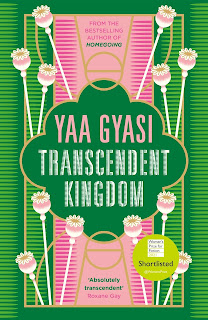
These are the final reflections of the main character, Gifty, at the end of the wonderful novel, Transcendent Kingdom by Yaa Gyasi. 

Gifty is a graduate student in neuroscience at Stanford, who at the end of the novel is a Professor at Princeton. Her parents immigrated to the U.S.A from Ghana and she grew up in Alabama, just like the author. Gifty's choice of research topic [which involves experiments on mice] is motivated by her life experience including her brother's struggle with drug addiction. 


The narrative naturally engages with a wide range of issues, including the immigrant experience and the associated prejudice, racism, poverty, dislocation, and alienation that are too often encountered. It considers family relationships, particularly the bond and tensions between a mother and an adult child. It gives a picture of what it may be like to be a young woman of colour in an elite institution. Then there is sexuality, white Pentecostal churches in the USA, science and religion, mental illness, drug addiction, a personal face on the opioid crisis, and the philosophy of neuroscience, including the mind-brain problem,... This does seem like a long list of issues but the author manages to engage with them in a natural and meaningful way as part of a coherent narrative.

Although transcendent is in the title, there is not much explicit discussion of it in the novel. Nevertheless, I find it fascinating that transcendence is where it ends.

Wednesday, December 21, 2022

What is it about the Gospel texts that I find so amazing?

The Bible contains four Gospels: Matthew, Mark, Luke, and John. Each gives an account of the life and teaching of Jesus. There are many questions that we can and should ask about these literary texts. Indeed, over the past two thousand years, many people have explored questions and engaged in debates about authorship, historicity, divine revelation, moral authority, textual reliability, and the (im)possibility of miracles. 

In this post, I want to put aside these questions for now, and just focus on the Gospels as texts and public information. In a sense I am taking an empirical scientific perspective, viewing the texts as like scientific data, that is publically available. Everyone has access to this data. There is really little room for debate about what the data is. The debate is about how to analyse and how to interpret the data. 

Over decades I have read and re-read the Gospels and read what a range of people, both Christian and non-Christian say about them. Here I want to state some of the things that I think are truly amazing about these texts.

There is an incredible literary depth. Each Gospel interweaves different stories about Jesus, his teaching, and quotations and allusions to the Jewish scriptures (Old Testament). After two thousand years, they are still considered some of the best literature ever produced and still attract intricate and subtle analysis from literary scholars. In this regard, they are in a different league to any other literature unlike any other literature from two thousand years ago, including Christian literature.

I find the most amazing thing to be the teachings of Jesus. They are radical, counter-cultural (then and now), comforting, and challenging. Jesus' teaching provides an insightful description of reality: money, power, pride, evil, human nature, human dignity, relationships, forgiveness, competing values, and self-righteousness. Although sometimes abstract and difficult to interpret, Jesus' teaching provides a very down-to-earth and practical guide for daily living. Jesus' life also illustrates what this "good life" should look like.

I delight in the creativity and profundity of the paradoxes presented. The first will be last. The last will be first. The humble will be exalted. Become great by being a servant. Save your life and you will lose it. Lose your life and you will find it. The Kingdom of God proclaimed by Jesus is an upside-down kingdom, in stark contrast to the kingdoms of this world where money, power, privilege, and social status are exalted and determine who rules.

Jesus' upside-down kingdom is illustrated and embodied in his embrace of the marginalised: tax collectors, prostitutes, the poor, widows, orphans, Samaritans, cripples, and "sinners." This makes the empathetic part of my soul sing. There is hope. And, it challenges me as a child of privilege, to follow Jesus' example.

                                      Christ on the Cross by Rembrandt

The centrepiece and climax of the Gospel narratives are the Cross: the death of Jesus by crucifixion. He is publically humiliated and executed as a criminal and social outcast. There are many dimensions to what the Cross represents: an embrace of suffering, identification with the weak, and atonement for sin, ... It is the ultimate embodiment of the upside-down kingdom as it is about power through weakness, and wisdom through foolishness. For the time and place of Roman-occupied Palestine, the Cross is about as counter-cultural as possible. Jesus' death defines a model for how he wants his followers to live.

In the midst of a messed-up world, both then and now, the Gospels present me hope, through the resurrection of Jesus and the promise of a forthcoming just judgement. Evil will be punished. Those who have suffered unjustly will experience deliverance.

I have not encountered any other literature, from any age, or of any genre that compares to the richness and inspiration I find in the Gospels.

The impact of the Gospel narratives is amazing. The early church went from being a small rag-tag band of followers to a cultural force that ultimately transcended and outlasted the mighty Roman empire. This incredible influence has been well-documented by authors such as Tom Holland and Rodney Stark.

The Gospels exhibit an amazing universality in particularity. They were written in ancient Greek at a particular time, in a particular place, and in a particular religious, political, cultural, and economic context. Despite their particularity the relevance and impact of the Gospels are enduring, transcending time, space, language, context, and culture. They are "translatable" in every sense of the word. They are accessible to all, being both profound and simple.

These amazing things raise many questions for me. Why do the Gospels have such an impact on me and on others? What is it about them that makes them so unique? Why are the Gospels so superior to other literature, both past and present? Why do they resonate? inspire? comfort? transform people? 

Taken together all the features I have noted provide hints of transcendence. Perhaps the Gospels are something more than great literature and words on a page. Could they be a living word? And who was the person Jesus described in the Gospels? Was he something more than the creation of some great literary minds, or more than an extraordinary man? Could it be that the Gospels describe what actually did happen? Could Jesus' teaching actually be true?

J.R.R. Tolkien and C.S. Lewis were two of the most creative literary minds of the twentieth century. They considered the Gospels to be the greatest story ever told. Here are some of Tolkien's reflections.

Of course I do not mean that the Gospels tell what is only a fairy-story; but I do mean very strongly that they do tell a fairy-story: the greatest. Man the story-teller would have to be redeemed in a manner consonant with his nature: by a moving story. But since the author of it is the supreme Artist and the Author of Reality, this one was also made . . . to be true on the Primary Plane. (Letters, 100–101)

 ‘this story is supreme; and it is true. Art has been verified. God is the Lord, of angels, and of men—and of elves. Legend and History have met and fused’ (‘On Fairy-stories’, 63).

Wednesday, June 16, 2021

Latin American perspectives on who Jesus is

In Search of Christ in Latin America: From Colonial Image to Liberating Savior, by Samuel Escobar is fascinating and helpful. It takes a historical approach to Christology, surveying how ideas about Christ developed over time in Latin America. Particular attention is paid to the changing context: cultural, political, economic, and literary. 

I found it striking and unusual that poetry features heavily. The book contains poems featuring Christ and written by a range of Latin American authors; and discussions of the influence of some of these poems. I found this surprising and fascinating. It highlights a significant cultural difference for me. I am not sure I have ever read a book about Western theology that discussed poetry, if at all. Furthermore, in wider Western society, beyond certain literary elites (cliques?), I do not think poetry has much influence, particularly at the level of politics or public intellectuals. In contrast, it seems that in Latin America, poets can be celebrities, public intellectuals, and have enough political influence that they can be perceived as a threat to governments, as was the case with Pablo Neruda.

Here are a few highlights from what I have read so far. In the era of colonial conquest,

[to the natives] Christ was presented as Lord and that acceptance of his lordship essentially meant submission to the church and the conquistadors...

the Catholic missionary effort during the sixteenth century was closely tied to the subjugation of the indigenous through military conquest.

...analysis of legislation imposed on the Indians shows that it juxtaposes civilisation and mission, a process based on the assumption that first, the Indian was to be civilized to become a "human", so that later he might become a "Christian." (page 35)

As the Catholic church became established there was significant syncretism, with Catholic rituals being combined with pagan ones.

Broadly, there have been two dominant images of Jesus, particularly through art. Jesus was a baby and Jesus died on a cross. His actual life and teaching received scant attention.

The Bible was banned by colonial and church authorities. But in the 1800s Bible distribution began through travelers and then foreign Protestant missionaries.

Argentinian theologian Jose Miguez Bonino describes the contours of the theology  that emerged from that era in his book Faces of Latin American Protestantism. He describes the results of his research as a thesis statement

that toward 1916 American missionary Protestantism was basically "evangelical" according to the model of an American evangelicalism of the “second awakening": individualistic, Christological-soteriological in a basically subjective key, with emphasis on sanctification. It had a genuine social interest, expressed in charity and mutual aid, but did not have a structural and political perspective save as it touched on the defense of its own liberty and the struggle against all discrimination. Therefore it tended politically to be liberal and democratic, but without sustaining that option in its faith, nor making it an integral part of its piety. (page 57)

I found this particularly interesting because it has certain similarities to the contours of the theology of many Western "evangelical" churches today.

John Mackay (1889-1983) was a Scottish Presbyterian who worked from 1916 to 1936 in Latin America as a missionary, before becoming President of Princeton Theological Seminary. His book, The Other Spanish Christ, is still in print. He gave many lectures to university students, teaching on the parables of Jesus. Central themes were the kingdom of God, the love of God, and the ethical heart of Jesus's teaching. Commenting on the parable of the good Samaritan, Mackay concludes

Something more is needed for the spirit of the Good Samaritan to be translated into the philanthropy required in a time 20 centuries after Christ lived, sporadic charity is not sufficient, nor even systematic charity for the relief of suffering. The primary responsibility of Good Samaritans today is to show their passion for humanity in working toward the disappearance of the avoidable causes of suffering, this is much more difficult charity, more complicated and more prosaic than direct help to the needy. It will always be necessary to have oil and wine to dress the wounds and arms unfortunate travellers, but more necessary the charity that studies the problem caused by cruel, hands been in sensitivity of capable of witnessing human pain without feeling any responsibility. (page 62)

In 1929 the third continental congress of evangelicals was held in Havana. This was chronicled by Gonzalo Baez Camargo. It was noted that the Catholic church was marked by "dogmatism without space for individual thought" that impelled curious minds into agnosticism. Furthermore, the Catholic church had retreated "from the social and spiritual needs of our people." Escobar states "the diagnosis is direct and coincides made by Catholic theologians themselves decades later", quoting Baez-Camargo.

The church interpreted the kingdom of heaven as a state of blessing in the life to come and not as a kingdom of charity, fraternity, and justice in this earthly world that we live in. And while preaching resignation and hope to the unhappy and oppressed, they forgot to preach justice and love to the pitiless owners and capitalist slave traders. They did not do anything effective to improve social conditions and to guide a wise evolution towards the liberation of the enslaved masses. (page 65)

In his own writings, much of it in newspaper columns, Baez-Camargo emphasised the humanity of Jesus, a personal relationship with Christ as the starting point for the Christian life, appropriation of the redeeming death of Jesus, and a theology of experienced grace.

For in effect intellectual dogmatism, that is, a dominant preoccupation with mere orthodoxy, usurps the gospel at a deep level. It makes salvation consist not of the redemptive work of Christ, which believers accept for themselves, personally by faith, but rather of a comprehensive and sworn consent to a system of theological formulas. For the person of the living and cherished Christ it substitutes a beautiful, compact, consistent creed about Christ. And thus it proclaims that what saves is not to believe in Christ but to have orthodox beliefs about Christ. (page 75). 

And that brings us back to poetry. In 1949, Baez-Camargo began to "the evangelical mark on Hispano-American poetry."

I am only one-third of the way into the book. So far it nicely highlights the interaction of culture, history, and theology. Each of us lives in a particular context and we can learn a lot from comparisons of how Christ is viewed in different contexts. What is universal? What is particular?

A beautiful introduction to the book is by Escobar himself.

Wednesday, February 3, 2021

Creative influence

 How do you influence people to take seriously and engage with an important issue in society? My natural tendency would be to document the problem with statistics, background, context, analysis and concrete suggestions to address the problem. In that sense, I am a technocrat. A Presbyterian once joked with me: if Presbyterians had heard Jesus tell the Parable of the Good Samaritan, that would have formed a committee to prepare a report about the problem of violent crime on the Jericho road!

There are alternative approaches to social and political critique. They are creative and indirect. A classic example is the novel, Animal Farm, by George Orwell. I recently read it for the first time, prompted by my daughter who had just read it for a book club. It is a classic work of satire. The book is only one hundred pages, easy to read, funny, subtle, imaginative, and pointed. It is a satire of the Soviet Union under Stalin. Violent and sudden political revolutions may begin with noble values of justice, truth, equality, and camaraderie. However, power corrupts and revolutionary governments can quickly degenerate into totalitarianism, the cult of personality, corruption, propaganda, violence, deception, revisionist history, and inequality. Truth suffers and the oppressed can't face the pain of questioning the deceptions and the failure of the revolution. Power is maintained by creating "the other", constructed enemies within and without, who allegedly threaten the revolution. This justifies the violent suppression of dissent.

Sadly, the Soviet Union was not a unique case. The same pattern of degeneration has happened in Nicaragua, Venezuela, Cambodia, ...

Orwell had political concerns, being opposed to tyranny of all forms, both from the left and the right. After fighting on the republican (socialist) side in the Spanish civil war, he witnessed firsthand the ruthless purges of his comrades by Stalinists. This partially motivated the writing of Animal Farm. He was concerned about the uncritical support of the Soviet Union, by both the left, and by the right. The latter saw it necessary in order to win World War II. Orwell's earlier writing had been more direct, such as in Homage to Catalonia, a chronicle of his experiences in the Spanish civil war. But, Animal Farm had a far greater impact, particularly in the long term. A new edition is about to be issued, with a new introduction, by Jason Cowley, Editor of The New Statesman. This gives nice background to the novel and its enduring influence.

I also recommend an Econtalk podcast, from 2009, featuring Christopher Hitchens, author of Why Orwell Matters. One of many items of interest in the podcast is the discussion of the review written in 1944 by Orwell of The Road to Serfdom by F.A. Hayek.

Generally, I am not a fan of Hitchens as he was one of the champions of The New Atheism. I consider that their critiques of Christianity are largely ill-informed and superficial. Terry Eagleton has presented robust critiques of him and Dawkins. However, this podcast gave me a greater appreciation of Orwell and how Hitchens did justifiably become well known for some of his essays and biographies.

Orwell's strategy of influence reminds me of the examples of C.S. Lewis and J.R.R. Tolkien. C.S. Lewis started out doing traditional apologetics: giving rational arguments for the validity of Christianity. Later, he took a creative approach, aiming to capture people's imagination through his fictional work, such as The Chronicles of Narnia.

Wednesday, March 4, 2020

The fascinating world of John Milton

Recently at Theology on Tap, Ben Myers gave a fascinating talk, Poetry and Truth: What John Milton means to me, focusing on Milton's classic poem, Paradise Lost. One measure of the success of a talk such as this is that it inspires the audience to go and read the original work. Ben certainly did this.


     The illustration is The Temptation and Fall of Eve by William Blake.

I did not know that Milton worked closely with Oliver Cromwell, who I find to be a scary figure. Milton wrote Paradise Lost towards the end of his life when he was blind, under house arrest, and after a tragic personal life where his first two wives died in childbirth. The dreams he had for an English government that was not shackled to the crown, and the church was not shackled to the state were dashed.
He knew that something was wrong with the world.
He took the story of Genesis 1-3 and creatively filled in the gaps to create an epic poem, now considered to be one of the greatest pieces of English literature ever.
Each of the 12 books begins with a summary. The summary for book 9 illustrates the creativity of Milton.


The only contemporary of Milton that is mentioned in the poem, is Galileo, who Milton did meet in person. The meeting is depicted in the painting above.

Satan's shield is compared to the moon seen through the telescope of the ``Tuscan artist.''
He scarce had ceas’t when the superior FiendWas moving toward the shore; his ponderous shieldBehind him cast; the broad circumferenceHung on his shoulders like the Moon, whose OrbThrough Optic Glass the Tuscan Artist viewsAt Ev’ning from the top of Fesole,Or in Valdarno, to descry new Lands,Rivers or Mountains in her spotty Globe.
An interesting blog post, Milton and Galileo: Affinities between art and science, by Brigitte Nerlich states:
Many articles have been written about Milton and the telescope but I only want to quote from one by Marjorie Nicolson (1935): which claims that Milton never forgot the experience of looking through a telescope and seeing new worlds on the moon. This, she says, “is reflected again and again in his mature work; it stimulated him to reading and to thought; and it made Paradise Lost the first modern cosmic poem, in which a drama is played against a background of inter-stellar space”. 
The encounter with Galileo and the telescope left in fact many traces in Paradise Lost: “each of Galileo’s most famous discoveries is reflected in one or more passages in the epic. Among them are the countless newly sighted stars (7. 382-84), the nature of the Milky Way (7. 577-81), the phases of the planet Venus (7.366), the four newly discovered moons around Jupiter (8.148-51), the new conception of the moon (7. 375-78), the nature of moon spots (1. 287-9; 5. 419-20; 8. 145-48), and the nature of sun spots (3. 588-90)”. (Hunter, A Milton Encyclopedia, vol. 3, p. 120-121).

Wednesday, November 20, 2019

War is Hell. 7.

I enjoyed watching the movie, Tolkien. It represents the early life of the famous fantasy writer. The main elements of the story are his difficult childhood as an orphan, the close bonds he formed with a group of high school friends with a common interest in creating literature, the trauma and tragedy of his experience in the trenches of World War I, his romance with his wife-to-be, and how these all shaped his creative imagination.

For me, the over-riding impression was ``war is hell.'' All Tolkien's friends die in the war, except one who is never the same again. Tolkien only survives because he is evacuated due to illness.


Arguably an important part of Tolkien's education and personal formation was that his school provided the opportunity for him to be part of a small group of friends with a common passion and vision. This highlights several overlooked aspects of most educational institutions, particularly in this neoliberal age, where the focus almost exclusively on measurable outcomes such as test scores, graduation rates, and starting salaries of graduates.

Sometimes the most significant part of education is the informal, not the formal aspects.

Real learning happens in the context of relationships, of students with one another, and with a teacher.

Western culture and thinking are individualistic. Consequently, most leading educational institutions claim to create significant individuals. However, perhaps a goal should also be to create significant informal communities or life-long bonds between students. I really like the book, Five Minds for the Future and am currently re-reading it. However, it is striking to me that the total emphasis is on individuals.

Friday, December 21, 2018

Even a scrooge can be redeemed

My lovely daughter's Christmas gift to our family was an outing to see A Christmas Carol, the theatrical adaptation of the classic novella by Charles Dickens.
I am not sure I have ever seen it before.

The story brings together many substantial themes: economic inequality, the plight of poor children, joy, judgement, love of money, the meaning of Christmas, altruism, and redemption.
The Bible story it most reminded me was the story of Lazarus and the rich man that Jesus told.

Christmas is about Emmanuel: God with us. Jesus is God's great and generous gift to humanity. He reveals who God is and offers us free redemption. This generosity should inspire us to be generous, particularly to those less privileged than us.

Monday, July 21, 2014

Concrete interactions of theology with academic disciplines

I went to a very nice conference this past weekend, at Emmanuel College at the University of Queensland. It was jointly sponsored by the Centre for Science, Religion, and Society at Emmanuel and the Simeon Network, affiliated with the Australian Fellowship of Evangelical Students. Here are the titles of some of the presentations:
  • Religious freedom as an associational legal right
  • Is all truth God’s truth? Common grace, general revelation and the academic disciplines
  • Lord keep my memory green: Charles Dickens' A Christmas Carol
  • The kingdom of God to the kingdom of nothingness: Manning Clark and the course of Australian history
  • Lord Shaftesbury and evangelical social engagement
  • Tertiary chemical education: an ideal platform for connecting resources with students and teachers in or from developing countries
The attendees and speakers were academics from Brisbane, Sydney, and Melbourne. They ranged from Ph.D students to Professors. Fields represented included law, chemistry, anthropology, literature, history, physics, molecular biology,....
I was impressed by the quality of the presentations, both in content and clarity. Speakers did well addressing a multi-disciplinary audience. Plenty of time was allowed for discussion after each talk which was often quite lively.

Here are a some things I found particularly interesting in two of the talks.

Nick Aroney, a Professor of Law at University of Queensland, began his talk about the legal basis of religious freedom in Australia by sketching out a diagram that showed the multi-disciplinarity of law as an academic discipline. He showed its connections with history, ethics, logic, hermeneutics, politics, theology... He then reviewed the preamble to the Australian constitution and Section 116 which discusses religious freedom. Most people think it in terms of individual religious freedoms but actually it is relevant to "associations" and "corporations". This is relevant to cases involving anti-discrimination, particularly as it pertains to the freedom for churches and religious organisations to use religious criteria for membership and staffing.

Natalie Swann is a Ph.D student in anthropology at University of Melbourne. She asked, "What would a  Christian ethnography look like?"
This was motivated by the fact that in the past decade significant interest has grown in academic anthropology about the interaction of anthropology with theology.
In 2006, Joel Robbins, [recently appointed to a chair a Cambridge] wrote a paper in the Anthropological Quarterly, Anthropology and Theology: An Awkward Relationship? that highlights some of the issues.
Earlier this year the journal Current Anthropology included an article


Saturday, April 19, 2014

The unique positive contribution of Christian universities

Hunter Rawlings is a former President of Cornell University, which is avowedly secular, and was co-founded by Andrew Dickson White, notorious for promoting the conflict thesis: that science and religion are at war with one another. Rawlings is currently the President of the Association of American Universities, a consortium of 60 of the leading North American universities.

The Princeton Alumni Weekly recently published a talk by Rawlings, Universities on the Defensive. In it he gives four essential reasons why the colleges and universities in the USA are the best in the world. I want to reflect on
2) they are a crazily unplanned mix of public and private, religious and secular, small and large, low-cost and expensive institutions, all competing with each other for students and faculty, and for philanthropic and research support; 
I wonder why Rawlings thinks this.
Why might universities based on Christian values play a positive role that complements secular ones?
Here is what I think.

First, regardless of what you think of Christianity its influence is central to understanding much of the history, literature, and philosophy of the Western world. Yet, in secular universities there can be a tendency, both in teaching and research, to "censor" this or paint Christianity in such a negative light that it is not possible to appreciate this important influence. This leads to slanted and inaccurate knowledge.

Second, secular universities can be easily swayed by commercial interests and a functional view of education and research. Rawlings discusses this in his talk. It is all about training graduates so they can get high paying jobs and research should have commercial benefits. In contrast, Christians should view scholarship and education as having intrinsic value. Furthermore, education is not just for the gratification of the individual but is equipping the student to serve others and broader society, regardless of renumeration or acclaim. These competing perspectives can push secular universities in a more positive direction.

I don't want to gloss over that Christian universities have their own deficiencies. For example, scholarship and teaching can be hindered by narrow doctrinal perspectives and a fear of new knowledge. Here, secular universities put them under healthy competition and can complement them well. Hopefully, Christians in secular universities also help move them in these more positive directions too.

Friday, May 17, 2013

Apologetics in the twenty-first century

There is a helpful article "Atheists, Archbishops, and Airport Novelists: Recent trends in Christian apologetics," by Greg Clarke in the latest CASE magazine.

He lists four positive trends
  • God is well and truly centre-stage in global intellectual life.
  • The affective dimension of apologetics is receiving new, and overdue, attention.
  • Christianity is often now presented as a story, a very good story, and a story into which anyone can enter.
  • The ethical discontents of secularism have become a pathway into discussion of the moral shape of Christianity.
The discouraging trend is "Too many centres of apologetic engagement are entwined with specific or institutionalised political commitments, to their detriment and to the confusion of the public..... If a project on the relationship between God and science ends up as bitter dispute about the politics of teaching evolution or creation in schools, it has probably not achieved its best end."

Wednesday, December 26, 2012

Redemption through literature

My wife and I enjoyed watching the French movie My afternoons with Margueritte.
It highlights the importance of relationships, the power [for good and ill] of parents, and the value of literature.

.

Thursday, April 19, 2012

Plundering the Egyptians?

For the next meeting of the fortnightly theology reading group ("the Volfians") we are reading an article "Christian Poetics, Past and Present" by Donald T. Williams. It is reprinted in a volume, The Christian Imagination: The Practice of Faith in Literature and Learning.

I am still reading and digesting the article, but I found interesting the quote below from Augustine, who seems to have had ambivalent views towards literature.
 Any statements made by those who are called philosophers, especially the Platonists, which happen to be true and consistent with our faith should not cause alarm, but be claimed for our own use, as it were from owners who have no right to them. Like the treasures of the ancient Egyptians, who possessed not only idols and heavy burdens. . .but also vessels and ornaments of silver and gold, and clothes, which on leaving Egypt the people of Israel, in order to make better use of them, surreptitiously claim for themselves (they did this not on their own authority but at God’s command).... - similarly the branches of pagan learning contain not only false and superstitious fantasies... but also studies for liberated minds which are more appropriated for the service of the truth, and some very useful moral instruction... The treasures.. which were wickedly and harmfully in the service of demons must be removed by Christians... and applied to their true function, that of preaching the gospel.
Augustine, De Doctrina Christiana

Wednesday, February 8, 2012

Telescopic philanthropy

It is Charles Dickens 200th birthday and I have enjoyed reading some of the tributes. It makes me want to read some of his books!
Besides his literary genius Dickens is particularly appreciated because of the awareness he created of poverty and social injustice in Victorian England.

One thing I learnt was that Dickens coined the phrase Telescopic philanthropy: how we can be blind to needs close to home because we are so concerned with being "do gooders" in foreign lands. Dickens used the phrase as a chapter title in the novel Bleak House to describe the character Mrs. Jellaby.
I thought this 1992 article from the Independent somewhat interesting. It considered Mrs. Jellaby in light of Catholic teaching about the parable of Lazarus and the Rich Man (Dives).

Saturday, December 31, 2011

A Biblical debt

The Christmas Day edition of the New York Times Sunday Book Review section had a story on the front page, The Book of Books - What literature owes the Bible by Marilynne Robinson, a Pulitzer-Prize winning author. I am not sure I really understand, fully appreciate, or agree with her piece. However, it is worth reading and highlights a point I have made before: you can't understand the literature (and history) of the Western world without a deep knowledge of the Bible. Hence, it needs to be an important component of a secular education. As I posted earlier, The Prime Minister of Australia agrees (in words but not in policy).