Showing posts with label gender. Show all posts

Saturday, July 4, 2026

Engaging Biblical narratives of violence against women

This month at the theology reading group, we are discussing "Texts of Terror: Literary-Feminist Readings of Biblical Narratives" by Phyllis Trible. I read the 40th Anniversary edition that has a beautiful foreword by Gale Yee, highlighting the enduring influence of the book.

It is not a comfortable read due to the content. Trible expounds four Old Testament texts that recount terrifying violence against women:

1. Hagar: The Desolation of Rejection (Genesis 16:1-16, 21:9-21)

2. Tamar: The Royal Rape of Wisdom (2 Samuel 13:1-22)

3. An Unnamed Woman: The Extravagance of Violence (Judges 19:1-30)

4. The Daughter of Jephthah: An Inhuman Sacrifice (Judges 11:29-40)

Her methodology combines a feminist reading with rhetorical (literary) criticism. The former

interprets stories of outrage on behalf of their female victims in order to recover a neglected history, to remember a past that the present embodies, and to pray that these terrors shall not come to pass again. In telling sad stories, a feminist hermeneutic seeks to redeem the time. (page 3)

With the latter

"accent is upon the inseparability of form, content, and meaning; the rhetorical formation of sentences, episodes, and scenes as well as overall design and plot structure; and the portrayal of characters, most especially the violated women.

If literary criticism is the methodology and feminism the perspective, Jacob’s wrestling at the Jabbok provides the story for our journey (Gen. 32:22– 32)...

As a paradigm for encountering terror, this story offers sustenance for the present journey. To tell and hear tales of terror is to wrestle demons in the night, without a compassionate God to save us. In combat we wonder about the names of the demons. Our own names, however, we all too frightfully recognize. The fight itself is solitary and intense. We struggle mightily, only to be wounded. But yet we hold on, seeking a blessing: the healing of wounds and the restoration of health. If the blessing comes—and we dare not claim assurance—it does not come on our terms. Indeed, as we leave the land of terror, we limp." (pages 3-5)

Each chapter has a frontpiece of a sketch of a gravestone memorialising the afflicted woman featured in the chapter. 

The most striking thing about the book is just how disturbing these texts are. The violence itself is chilling but made even more disturbing by the context and fallout, and the duplicity, deception, passivity, and rationalisation of some of the protagonists and observers. Furthermore, where is God?

The two things I appreciated most about the book was how Trible is so respectful of the Biblical text and how attentive she is to details (particularly in the original Hebrew) in order to wrestle with it and extract something from it.

Here are some examples. The first shows the use of names/identities in the interactions between Sarah and Hagar.

The presence of Ishmael in Canaan plagues the future of Isaac, whose inheritance is threatened. In her move to eliminate the danger, Sarah debases Hagar and Ishmael while exalting herself and Isaac. The phrase “her son,” without the name Ishmael, counters “my son . . . Isaac.” The description “this slave woman,” rather than “my maid” (cf. 16:2), increases distance between Hagar and Sarah. Not only is the possessive adjective my missing, but also a change in nouns connotes a change in status. From being a maid (šipḥâ) to Sarai in scene one, Hagar has become a slave (’āmâ), serving the master of the house as his second wife. By contrast, Sarah, the first wife, enjoys power greater than ever because she has born a son. As the life of the mistress has prospered, the lot of the servant woman has worsened.

With a disturbing twist, the words of Sarah anticipate vocabulary and themes from the Exodus narrative. When plagues threatened the life of his firstborn son, Pharaoh cast out (gr!) the Hebrew slaves. Like that monarch, Sarah the matriarch wants to protect the life of her own son by casting out (gr!) Hagar the slave. Having once fled from affliction (16:6b), Hagar continues to prefigure Israel’s story even as Sarah foreshadows Egypt’s role. Irony abounds. (pages 20-1)

 A second example involves noting feminine verb forms that are not present in English.

Hagar wept. Pointedly, the Hebrew text says, “She lifted up her voice and she wept” (21:16c). From ancient times, however, translators have robbed this woman of her grief by changing the unambiguous feminine verb forms to masculine constructions. Such alterations make the child lift up his voice and weep. But masculine emendations cannot silence Hagar. A host of feminine verb forms throughout this section witness unmistakably to her tears: she departed and she wandered in the wilderness; she found a place for the child to die; she kept a vigil; and she uttered the dread phrase, “the death of the child.” Now, as she sits at a distance from death, she lifts up her voice and she weeps. Her grief, like her speech, is sufficient unto itself. She does not cry out to another; she does not beseech God. A madonna alone with her dying child, Hagar weeps. (pages 24-5).

A third example is the use of a chiasmus (a symmetrical literary structure where something (words, concepts,...) is repeated in the reverse order). This is used in the description of the rape of Tamar by her brother Amnon.

In this central unit, form and content yield a flawed chiasmus that embodies irreparable damage for the characters. Amnon’s commands and various responses to them mark the beginning and the end. Within the inclusio Amnon and Tamar are the sole participants. In the first half come his command and her response, followed by a conversation between the two. In the corresponding section of the second half, their conversation collapses into his command and her response. The rape itself constitutes the center of the chiasmus. This design verifies the message of the preceding circular patterns: Tamar is entrapped for rape.

a Amnon’s command to the servants and their response (13:9de)

b Amnon’s command to Tamar and her response (13:10– 11a)

c Conversation between Amnon and Tamar (13:11b– 14a)

d Rape (13:14b– 15b)

c′- b′ Conversation between Amnon and Tamar: Amnon’s command to Tamar and her response (13:15c– 16)

a′ Amnon’s command to a servant and his response (13:17– 18)  (pages 43-4)

Trible's attention to these details helps us appreciate more the careful construction of the Biblical texts. Moreover, we experience the power of the text.


Monday, August 18, 2025

The centrality of marginality to Christian theology and life

This month at the theology reading group, we are discussing Marginality: The Key to Multicultural Theology by Jung Young Lee.

How do we make sense of our life experience in terms of theology? How do we make sense of theology in terms of our life experience? Given our humanity (finitude and egoism), it is impossible to completely separate our theology and our experience. Will they enrich or distort one another? Previously, I have written about the challenges of contextual theology.

Jung Young Lee was born in North Korea in 1935, escaped to South Korea during the Korean War, and immigrated to the USA as an undergraduate student. He then worked as a librarian, obtained a Ph.D., taught in a secular university, became a minister in the United Methodist Church, was active in its Korean-American congregations, and became a Professor of Systematic Theology at Drew University. Over the years, he experienced racism, prejudice, and stereotyping as an Asian-American.  Not feeling he belonged in the USA, he returned to South Korea at one point with the intention of staying. However, he discovered that he felt he no longer belonged there either.

Lee makes sense of his life through three lenses: historical, sociological, and theological. He recounts the historical experience of immigrants to the USA from Japan, Korea, and China, beginning in the nineteenth century. It is a sad and disturbing history of exploitation, discrimination, and humiliation. He discusses the sociological concept of marginality that was introduced to describe the "integration" of immigrants into the American "melting pot." He contests some of these definitions as they are developed by those in the centre and assume that being on the margins is bad and that the marginalised should move towards the centre. The centre is characterised by a concern with "wealth, power, and glory." (page 31)

"Immigration is the most vivid and profound symbol of marginality for us." (page 110).

Lee claims that "Theology is autobiographical so I reflect on my praxis and context." (page 33).

Lee discusses how marginality is central to the Biblical narrative. The Tower of Babel "was the symbol of centralisation" (p. 110). 

Lee suggests that in Old Testament narratives there are three acts (p,111). 

1. God's call to be a marginal people

2. Faith

3. "The promise which includes  receiving land, becoming a powerful nation, and making a great name (Genesis 12:1-9)."

"These three acts are inseparable. The first and third acts seem to contradict one another, but they are connected in the second act. The order of these acts cannot be reversed.... Tragedies in the history of Judaism and Christianity were due to the reversal this order... The coexistence of both marginality (the first act) and centrality (the third act) is possible in faith (the second act), the connecting principle..."

There is a dialectic. It is both/and rather than either/or.

God called Moses from his marginal status to lead the Israelite slaves out of Egypt. They wandered in the wilderness for forty years. Jesus was born in a stable, the son of a teenage unwed woman, and grew up in Galilee. In the wilderness, he resisted the temptation to embrace "wealth, power, and honour." He was scorned by the centre: the local religious and political leaders. The focus of his ministry was on the marginalised: the poor, sick, ritually unclean, hungry, lame, beggars, prostitutes, and tax collectors.  Jesus' death on the cross was the ultimate symbol of marginalisation. His disciples were not drawn from the social, political, or religious elites.

Humility, service, and love are the dominant characteristics Jesus said his followers should have. The early church did this and lived on the margins. Yet, following Constantine and the rise of Christendom, the church embraced centrality and scorned marginality. It was characterised by wealth, honour, and power. Today, the church, in all its diverse forms, still aspires to centrality. It is hierarchical, bureaucratic, and exclusive. Dogma does not recognise multiple shades of grey. (p. 125) "Centralism is the cardinal sin that destroys the authentic church." (p.142)

Lee presents a radical alternative vision for the church, including for seminaries. He argues that cell groups should be the core structural element of the church. Structures should be characterised by flexibility, local autonomy, and informality.

I have sympathy for his proposals, but sometimes I find he is idealistic and overly optimistic. Some of his proposals may work for a marginalised community such as Korean-Americans (who tend to be disciplined, well-organised, and highly educated). However, for groups of people such as the homeless and those with addictions or traumatic backgrounds, it is extremely challenging for them to develop structures and leaders. Such challenges are helpfully described in an earlier post by my wife, Robin.

On a personal level, I found the book challenging and discomforting. I am a child of the centre, in terms of family background, race, education, wealth, social status, and profession. Most of my life, I have been involved in churches and ministries that value and focus on centrality and marginality. This has not involved a blatant seeking after wealth, power, and honour. It has been much more subtle and subconscious, reflecting the surrounding culture and background of the participants and leaders. Too often I have been attracted to the centre and seduced by it. Only over the last fifteen years, I have a moved to a more marginal outlook and focus, stimulated by experiences in the Majority World. Yet the pull back to the centre is there day after day, particularly towards comfort, safety, and predictability.

The orientation and main messages of the book are largely not new to me. Nevertheless, it is a message I need to keep hearing. Lee's description of the immigrant experience, both his own and his historical predecessors, increased my imagination and empathy towards the immigrants I interact with. He gives seven characteristics of the experience of marginality: rejection, humiliation, alienation, loneliness, nothingness, allness, and a vision of new life.


Tuesday, January 24, 2023

Seeing transcendence in people and in science

“I’m no longer interested in other worlds or spiritual planes. I’ve seen enough in a mouse to understand transcendence, holiness, redemption. In people, I’ve seen even more.”

Once every few months of whenever the mood strikes, I take the long way home from the lab I run in Princeton just so I can step into that church… I never bow my head. I never pray, never wait to hear God’s voice, I just look. I sit in blessed silence, and I remember. I try to make order, make sense, make meaning of the jumble of it all. Always, I light two candles before I go. 

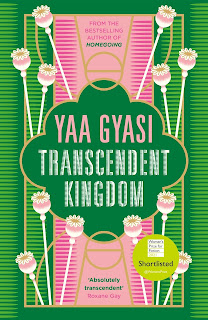
These are the final reflections of the main character, Gifty, at the end of the wonderful novel, Transcendent Kingdom by Yaa Gyasi. 

Gifty is a graduate student in neuroscience at Stanford, who at the end of the novel is a Professor at Princeton. Her parents immigrated to the U.S.A from Ghana and she grew up in Alabama, just like the author. Gifty's choice of research topic [which involves experiments on mice] is motivated by her life experience including her brother's struggle with drug addiction. 


The narrative naturally engages with a wide range of issues, including the immigrant experience and the associated prejudice, racism, poverty, dislocation, and alienation that are too often encountered. It considers family relationships, particularly the bond and tensions between a mother and an adult child. It gives a picture of what it may be like to be a young woman of colour in an elite institution. Then there is sexuality, white Pentecostal churches in the USA, science and religion, mental illness, drug addiction, a personal face on the opioid crisis, and the philosophy of neuroscience, including the mind-brain problem,... This does seem like a long list of issues but the author manages to engage with them in a natural and meaningful way as part of a coherent narrative.

Although transcendent is in the title, there is not much explicit discussion of it in the novel. Nevertheless, I find it fascinating that transcendence is where it ends.

Thursday, December 23, 2021

My twelve rules for life

To many one of the surprising phenomena of the past five years has been the popularity (and animosity towards) Jordan Peterson, a Professor of Psychology at the University of Toronto, who has become a Youtube "celebrity", both for his lectures (some of which engage with the Bible) and his live interactions with his opponents on TV talk shows.  His book, Twelve Rules for Life: An Antidote to Chaos has sold five millions of copies. In some ways, Peterson has become a key figure in the "culture wars" in Western society. People either love him or loathe him. He is particularly loved by young single secular men who find that he has provided orientation and purpose (for better or worse) to their lives. The New York Times columnist, David Brooks, noted
My friend Tyler Cowen argues that Jordan Peterson is the most influential public intellectual in the Western world right now, and he has a point.
The purpose of this post is not for me to take sides in the debate about Peterson, rather it is to engage in an exercise that Peterson has stimulated others to do. Write down their own "rules for life", particularly those that they would recommend to younger people. Examples are Tyler Cowen's 12 rules, and Megan McArdle's.

At first, I did not see the point of me writing down my own 12 rules. Why not just say, "obey the Ten Commandments"? However, it was pointed out to me that the problem with that stance is that secular young people will not engage with such sentiments.  So, here are my "laws". I should explain the approximate criteria that I have tried to use in coming up with them. Their goal is to promote human flourishing, particularly for individuals facing the challenges and opportunities of the postmodern Western world. They are "exhortations" of things to think and do, not observations about the way that the world is. But, I would like to think that they are based on observations about the way that the world actually is. There is some overlap between the different rules.
 
1. Accept that life is not all about you
This may go against all your instincts, wishes, and what you have been told by parents, teachers, school counselors, and advertising. Being self-centred does not work. You need other people, both to function in this world and to have a meaningful life. This is why you need to observe the next law.

2. Cultivate and preserve relationships
They are central to everything in life. We need them to survive, to function, to prosper, and to flourish.

3. Listen and learn
Most of us like to air our opinions and be the centre of attention. But, we are very finite and have limited knowledge, understanding, and life experience. The only way we can address that is by taking the time and energy to listen attentively to others. Listening and conversation are arts. Express sympathy before solutions.
We need to listen not just for the words but the feelings behind the words. Then we need to respond not just at an intellectual level (particularly by presenting our "solutions" to other people's "problems").

4. Expect, respect, and learn from diversity
You are unique. No one else in the universe is like you. Your DNA, life experience, strengths, weaknesses, and personality are like no one else. Hence, don't expect other people to be just like you, try to make them like you, or marginalise them because they are different to you.

5. Don't let money determine everything
This world is obsessed with money: salaries, investments, purchases, economic growth, shopping, budgets, fundraising,... But money tends to skew priorities in the wrong direction, too often harms relationships, and leads to disappointments, whether you gain money or lose it.

6. Get a dog! 
Then you won't take yourself and life so seriously. You will have more fun. You can see my rules, unlike Peterson's, are all a bit too serious and not very funny. Just like me. A dog helps. Get one.

7. Accept that some things are more complex than you might think
The world is complex, and life is complex. That can be overwhelming, scary, and confusing. Too often we think understand things and are drawn to simplistic solutions to complex problems. [Elect this politician and the country will get better. The answer to drug addiction is .... ]. A lot of life is grey, not black and white. Accept nuance. 

8. Accept that some things are simpler than you might think
On the other hand, some of us have a tendency to make things very complicated, whether it is academic jargon, training programs, or bureaucratic procedures. We also may procrastinate about concrete action because we think we have to come up with the perfect strategy that addresses all the complexities. For example, on the one hand, managing people is complex. On the other hand, if you do just a few simple things: listen, show an interest in them as a person, and adjust their job to their strengths, you can be quite a successful manager.

9. Aim to live in reality, not in fantasy
We all wish that the world were a certain way; that it conformed to our view of it. It may be scary and disorienting to accept that it may not be like that. However, because we are so finite, we need to be open to the fact that we may be wrong, be willing to change our views, and how we live as we butt up against the way the world really is.

10. Practise forgiveness 
No one is perfect. Everyone makes mistakes, some big, some small. When we are wronged by someone, whether intentionally or not, our relationship may be at a crossroads. Too often, we are unwilling to forgive, even when an apology is offered. We destroy relationships and live in bitterness. Forgiveness is powerful and can heal us and our relationships.

11. Focus on your own shortcomings rather than those of others
Our natural tendency is to be blind to our own shortcomings, weaknesses, and failings, but to have a highly tuned sense of the failings of others. This hinders both personal growth and good relationships.

12. Consider Jesus
Arguably, he is the most influential person in human history. His teachings, life, death, and influence over the past two thousand years are worthy of serious study and engagement.

One may notice that perhaps the most common themes in my laws are those of humility and the importance of relationships.

I welcome comments on my rules.

Sunday, February 28, 2021

Beauty, art, and mission

 Last night my wife and I watched Many Beautiful Things, a documentary about the extraordinary life of Lillias Trotter. It captures the beauty of her life and art and how she followed Jesus. The striking cinemaphotography gave a glimpse of the amazing ways that Trotter could see beauty in nature and then capture it in watercolours. Daily she wrote diary entries about her life and spiritual journey including ornate pictures of scenes and people she engaged with. She was independently wealthy and of frail health. She had artistic talent that could have led to her being the greatest English painter of her time, according to the judgement of John Ruskin (the leading English art critic of the 19th century). Yet, her desire to follow Jesus led her to care for destitute women in London and eventually women and children in Algeria. This choice was a great disappointment to Ruskin.


You can watch it for free on Youtube (with endless ads) or on RedeemTV without ads. I thank Tanglaw Roman for bringing it to my attention.

Wednesday, April 3, 2019

Mental health in a fallen creation

The Garden of Eden in Genesis 1-2 represents God's ideal. There is harmony between God and humanity, between male and female, and between humans and nature. There is no struggle for survival. There is no shame. Everything in the creation is good.

Yet this is not the world we live in.
People are alienated from God: they lose identity, purpose, and hope.
Men and women are in conflict.
Work is hard and stressful. It is usually a struggle for survival.
Humanity is alienated from nature.
People are ashamed.
Violence (physical, sexual, and verbal) is prevalent. Violence easily escalates and is passed on to the next generation.
The mind is corrupted. People believe lies, including about themselves.
Disease and death are present.

This is the world introduced in Genesis 3: the fallen creation. Adam and Eve believe a lie: they can be like God: be rulers and know everything. They rebel and experience the consequences: the world described above, a world of alienation.

Mental illness is part of the fallen creation. Depression is characterised by a lack of hope.

The Bible does not present a simplistic or reductionist view of what a human is. The description in terms of ``mind, body, heart, and soul'' is not dualist or even quadralist! Rather the Bible presents a holistic Hebrew perspective that being human and being whole is multi-faceted. Hence, mental health requires an integrated approach. The causes are complex. The solutions are complex. There are spiritual, biochemical, social, and psychological dimensions to be addressed. These dimensions often interact with one another, either constructively or destructively. Healing and prevention may require a blend of prayer, counseling, drugs, exercise, diet, supportive relationships, community building, and lifestyle changes.

The mandate for Christians is to bind up the broken hearted, heal the sick, and set the prisoners free.

Monday, February 18, 2019

Start with emphathy

When I encounter new ideas and new social movements my first reaction is analysis and critique. This probably stems from being an intellectual, being male, and being a reflective personality. When I was newly married I went out for lunch with an older married friend and he gave me one piece of advice about relating to my wife, ``sympathy before solutions".  This eventually became a catch cry in our family. However, I think this idea has much broader implications, particularly in living as a Christian.

For all their faults, it is striking and challenging that Job's friends actually sat and wept with him for days before they presented their "solutions" to the suffering of Job. They entered his pain.
When Jesus saw the crowds, "he had compassion on them because they were harassed and helpless.'' He did not immediately lecture them about their "poor life choices" or their "wrong theology". There are countless scriptural examples from the Old Testament prophets to the letter of James that rebuke God's people for not listening to the cries of the oppressed.

Everyone has a story. Everyone's life has produced a rich raft of experiences, with a diverse mix of joy, pain, disappointment, struggle, ... These experiences shape their world view and response to their circumstances.
Many of my experiences are probably quite different. In particular, although my life has not been devoid of pain or struggles, I have had a privileged existence as a wealthy white male living in one of the most privileged countries in the world. I really don't know what it is like to be a Dalit, to live in a slum, to be an African-American living in the southern USA, to be a refugee, to live under military dictatorship in a poor Latin American country, to be a Muslim in Australia, to be a woman who has been sexually assaulted, ...

So when I encounter issues such as liberation theology, #metoo, economic inequality, racism, immigration, ... a challenging starting point is to listen and try and put myself in the shoes of those who cry out. What is their experience? What is their pain? How does that affect their perspective?
That does not mean I have to agree with absolutely every single detail of their agenda, their perspective, their claims, their politics, their theology, their methods, ....

In discussing the idea of "double listening" John Stott says
For the voices of our contemporaries may take the form of shrill and strident protest. They are now querulous, now appealing, now aggressive in tone. They are also the anguished cries of those who are suffering, and the pain, doubt, anger, alienation and even despair of those who are estranged from God. I am not suggesting that we should listen to God and to our fellow human beings in the same way or with the same degree of deference. We listen to the Word with humble reverence, anxious to understand it, and resolved to believe and obey what we come to understand. We listen to the world with critical alertness, anxious to understand it too, and resolved not necessarily to believe and obey it, but to sympathise with it and to seek grace to discover how the gospel relates to it. . . .
The Contemporary Christian: An urgent plea for double listening, page  28.

Wednesday, February 6, 2019

Slow living in black and white

My wife and I watched (endured?) the movie Roma, which chronicles the life of a maid living with an upper-middle-class family in Mexico City in the 1970s. It is hard to know what to say. On the one hand, the photography (in black and white) is amazing. It encourages the viewer to slow down and engage with the moment, whether water going down a drain or the pain of betrayal. On the other hand, it is very slow! There is a social justice dimension but this was not as strong as I hoped. There is a certainly a message about how women cannot depend on men!
Perhaps for me, the most interesting thing was learning about the Corpus Christi Massacre; a black operations army group (trained in the USA) killed more than 100 student protesters. This was part of Mexico's "Dirty war".

Thursday, June 21, 2018

Who decides whether a woman is "free" or "oppressed"?

I read a fascinating New York Times article
The College Student Who Has France’s Secularists Fulminating,
which describes how Maryam Pougetoux, a student leader has caused offense because she wore a traditional head scarf when interviewed on TV about student protests.
Some secularists considered it inconsistent with her being president of a student union and with advocacy of the progressive and feminist values she stands for.
Critics seem focused on her clothes rather than what she said.


In such discussions I wonder about whether some women in the Western world are really free?
There is incredible social pressure (from both men and women) for women wear make up, high heels, revealing clothing, and adopt certain poses. Some women freely choose such options, others do so out of compulsion, whether consciously or sub-consciously.


The article about the french controversy is interesting to juxtapose with a recent article in The Australian newspaper, Race, gender politics swamp great debate, Controversy has arisen because the Sydney University Debating Society has introduced gender-based quotas for their teams.
The article features the photograph below of a student who supported the quotas. 


Sunday, January 28, 2018

Why societies need a free press

I really enjoyed the movie, The Post, which is based on the role that the Washington Post, and particularly the Publisher Katharine Graham, played in publishing the Pentagon Papers after the Nixon White House obtained a court order stopping the New York Times from doing so.

One intriguing aspect of the movie was it showed how much the world has changed since 1971, particularly with regard to technology and gender issues.

Newspapers and secret military documents were all hard copies. This made stealing, copying, and distributing the latter difficult. Articles were written on typewriters and newspapers were mechanically typeset. Photocopies were done page by page. The only phones were land lines and pay phones.
It is a long way from today's fast-paced and highly connected world of the internet, email, Wikileaks, and mobile phones.

The journalists and politicians were largely middle-aged white males. The movie shows what a pioneer Katharine Graham was and how hard it was for her to be taken seriously. She had the added obstacle that she had been belittled as a child and as a wife and so struggled to overcome her low self-confidence. Meryl Streep brilliantly shows this increasing confidence. The movie also shows how Graham became much admired by younger women.


The movie briefly mentions how Graham's husband died by suicide, leaving her to take over the newspaper. It does not discuss the associated mental health issues.

The main issue in the movie is resolved by a 6-3 ruling of the US Supreme Court, which allows further publication of the Pentagon papers. Justice Black wrote:
In the First Amendment the Founding Fathers gave the free press the protection it must have to fulfill its essential role in our democracy. The press was to serve the governed, not the governors. The Government's power to censor the press was abolished so that the press would remain forever free to censure the Government. The press was protected so that it could bare the secrets of government and inform the people. Only a free and unrestrained press can effectively expose deception in government.
Some of this is quoted in the movie. I also recommend the earlier movie, The Pentagon Papers, which focuses on the role of Daniel Ellsberg who was the source of the leak to the New York Times and the Post.

Friday, October 20, 2017

Who is this powerful man who fell?

He was highly creative and what he produced inspired many.
His success led to him being very powerful in his field.
Women sought help from him and wanted his approval.
Tragically, he used his power to sexually abuse countless (hundreds?) of women over decades.
There were widespread rumours.
Because of who he was and his power many chose not to believe the rumours.
Colleagues covered up for him.
His employer covered up for him.
Only after a New York Times article appeared, did his employer properly address the issue.
Reading about the conduct of this "dirty old man" makes one want to take a shower.
He never took full responsibility, or made appropriate apologies, but blamed others.
Furthermore, he came up with highly convoluted rationalisations for his behaviour.

Who is this man?
You are probably thinking of Harvey Weinstein, the Hollywood producer.

But actually, this history also describes that of the highly influential Mennonite theologian, John Howard Yoder.

Unfortunately, when it comes to sexual abuse it does not matter what the religion, philosophy, denomination, or theological position. They all have their abusers and victims.

There is a new article by Stanley Hauerwas [who played a significant role in bringing Yoder's theology to a wider audience] who wrestles with his own role and response. It makes painful but worthwhile reading.

To me, this tragedy highlights many important lessons.
One lesson is the importance of personal integrity and accountability. Furthermore, as Hauerwas emphasises you cannot separate theology and action. Mind, heart, and body are integrated and inseparable.

Christian leaders (that includes me!) have to take very seriously Paul's exhortation to Timothy:
Watch your life and doctrine closely. Persevere in them, because if you do, you will save both yourself and your hearers.
You cannot separate life and doctrine. How you act is just as important as what you believe. Unfortunately, believing and speaking the "right" thing is an awful lot easier than living the right way.

Furthermore, we have an incredible capacity for self-delusion. This is particularly true when power, sex, or money are involved.

Thursday, December 22, 2016

A landmark event in USA social and political history

I should be wary about recommending movies that I have watched on a long flight. The combined factors of boredom and fatigue can reduce my critical faculties. Sometimes if I watch the same movie at home later with my family, I wonder why I recommended it.

Nevertheless, I am confident that Confirmation is worth watching, particularly because of the issues it raises and the historical significance of the events it chronicles. In 1991, Clarence Thomas was nominated to be a justice of the USA Supreme Court. Anita Hill, who had worked for him previously accused him of sexual harassment. At the time, she was a law professor at Oklahoma University and appeared before the Senate judiciary committee. Thomas denied the allegations. It degenerated into he says vs. she says. Some believed him. Some believed her. Who people believed was strongly correlated with their political views.

The trailer is here.

I found some of the movie painful to watch. The lust for power and struggle for political influence was striking and distressing. The most disturbing thing for me was seeing the manner in which a group of old white male Senators interrogated and attempted to discredit a young African American women.

There is a PBS News interview with Anita Hill, 25 years after the event, that is worth watching.

In spite of Hill's allegations, Thomas was still confirmed by the Senate. Yet, the event was a landmark significantly raising the consciousness of the issue of sexual harassment in the workplace, leading to new laws and policies.

Some might say great progress has been made in 25 years. However, I find it very disturbing that this year a US presidential candidate was caught on tape bragging about sexually assaulting women. And, he was still elected!

Saturday, December 3, 2016

Who do you love to hate?

Republicans or Democrats, Atheists or Christians, young earth creationists or evolutionary biologists, Donald Trump or Hilary Clinton, Calvinists or Arminians, Muslims or Hindus, supporters or opponents of same-sex marriage, liberals or conservatives, Sydney Anglicans or the Uniting Church, Greens or One Nation, complementarians or egalitarians, Stockbrokers or social workers, pro-life or pro-choice, blacks or whites, capitalists or socialists, …?

Over the last decade, I think there has been a significant decrease in civil debate, both in public and private. Those with different views or from different social groups are disparaged or “demonised”. Sometimes this is blatant; other times it is more subtle.
Some groups seem to get their identity from who they “not” or what they are opposed to.

What is causing this contempt for the “other”?
I see several contributing factors.

Social media. 
This leads to people congregating in groups of “friends” who have similar views, values, and “identity” to their own. Highly specialised and like-minded groups (Calvinist Chelsea fans who also like cheese…)  can congregate. They don’t have to engage seriously with alternative views. They are in a “content bubble”. Communication is impersonal and terse. People say things online that they would be much less likely to say face to face to another. Extremist and impulsive views that were once said personally to a small group of people can now unfiltered reach thousands and even millions. Specialised and extremist talk radio and cable TV hosts play a similar role.

Politics.
 In a wide range of countries some candidates and parties have been able to successfully exploit “identity” politics and fear of and contempt for the “other” to get elected. The last USA Presidential election is an example.

“Post-truth.” 
I feel my view is true and yours is wrong and so it does not matter what evidence there is for a different view.

I should stress that none of us is immune to these tendencies. We are all prone to pride, prejudice, and self-righteousness.
I also stress that on my random list above there are some views or people I strongly disagree with. Some I find extremely troubling and even dangerous.
Not all views are equally valid. But, that does not give me the right to “hate” them.

Why should everyone be concerned about this?
Democracy, peace, and community depend on reasonable and diverse debate.

Why should Christians be concerned?
Our identity comes solely from being a follower of Jesus and knowing we are loved by God.
It transcends nation, denomination, ethnicity, and any particular theological or political views. And, everyone is made in the image of God, regardless of their views or behaviour, and is loved by God. Thus, they are to be respected and valued as a person.
Humility and gentleness need to replace self-righteous anger.
Consider the way that Jesus interacted with tax collectors and prostitutes.
He also harshly confronted the Pharisees for their pride and self-righteousness.

Monday, January 4, 2016

The struggle for women to have a voice

My daughter took me to see the movie Suffragette.
It was very moving and challenging. It is hard to realise that in most countries 100 years ago women did not have the right to vote. It did not come to Switzerland until 1971!
The movie "nicely" puts the denial of voting rights in the broader context of unequal pay, poor working conditions, child labour, domestic violence, sexual harassment, child custody issues, ....


After any "historical" movie my nerdy family reads and discusses Wikipedia pages about the relevant background. Reading the biography of Emmeline Pankhurst showed how like many influential leaders she had "clay feet". She was intolerant of dissenting views, even from her own children, and during world war one was extremely nationalistic, completing suspending her suffragette activities.

Sunday, November 15, 2015

Social and economic inequality undermines democracy

B.R. Ambedkar was largely responsible for writing the Constitution of India. He gave the following sober warning which seems even more relevant today, particularly in Western democracies.
“On the 26th of January 1950, we are going to enter into a life of contradictions. In politics we will have equality and in social and economic life we will have inequality. In politics we will be recognizing the principle of one man one vote and one vote one value. In our social and economic life, we shall, by reason of our social and economic structure, continue to deny the principle of one man one value.  
How long shall we continue to live this life of contradictions? How long shall we continue to deny equality in our social and economic life? If we continue to deny it for long, we will do so only by putting our political democracy in peril. We must remove this contradiction at the earliest possible moment or else those who suffer from inequality will blow up the structure of political democracy which this Assembly has so laboriously built up.” 
I first encountered this quotation on a large poster placed on a building wall at the Jawaharlal Nehru University (JNU) in Delhi.

Tuesday, July 14, 2015

What you say and what people hear may not be the same thing

One needs to be careful when speaking about controversial and sensitive issues, particularly in public.
Don’t assume that the hearers will receive your intended message.

Why?
Sometimes we are lazy listeners. We hear and interpret the message with respect to our own background, prejudices, and experience.
Sometimes we struggle to separate the message from the messenger.

Choose your words carefully. They sometimes mean different things to different people.
Creation, multiculturalism, evolution, liberal, fundamentalist, submission, modernism, literal, dogma…
Furthermore, I am not just talking about some narrow technical meaning, but rather positive or negative associations, depending on the audience.

Consider your social identity. It may colour whether your message can be received or considered credible.
For example, a university president has a salary of $1 million, yet tells students that due to financial pressures the university will no longer open the library on saturdays.
A white American pastor of an upper middle class congregration argues that Christians should not be concerned with poverty alleviation.

Whites making pronouncements about racism.
Men making pronouncements about sexual discrimination and harassment.
I am not saying it should not be done.
Just considerable caution, sensitivity, and realistic expectations are necessary.

Tuesday, July 29, 2014

My career is not my life

Tippi Hedren was a successful Hollywood actress who rejected the sexual advances of Alfred Hitchcock. He promised to ruin her career and he did.  In a recent New York Times article she was interviewed about her relationship with Hitchcock.
Of course, you must not have gone to his funeral. I did.
Why? I would assume the only reason you’d want to see his grave is to spit on it. You don’t get it. He ruined my career, but he didn’t ruin my life. That time of my life was over. I still admire the man for who he was.
I recently learned this in a sermon on Generosity and Relationships by Tim Keller.

Saturday, November 9, 2013

Slavery in Australia

Nicholas Kristof has a fascinating and challenging op-ed Slavery Isn't a Thing of the Past in the New York Times [I read it in a hard copy of the Times of India. Such is globalisation!].

There is an interesting twist in the article that involves Australia and shows that some short term- "mission/social service" trips involving teenagers can have big impact!

Monday, September 30, 2013

Church in Antwerp, Belgium

Two weeks ago I was in Antwerp, Belgium for a scientific conference. On the sunday beforehand I was able to attend the Antwerp Christian Fellowship. This is a multi-ethnic English speaking congregation.

There was a very moving presentation about the ministry Cherut [Hebrew for liberty], that reaches out to prostitutes in the red light district. Many are victims of human trafficking. Cherut was founded by one of the women from the Fellowship.

I also enjoyed meeting one of the elders, who had done a Ph.D in theoretical physics at New York University. He had become a Christian during that time and was involved with Redeemer Presbyterian Church in New York. To me this was just another small living example of how following Jesus and being a scientist are not in conflict.

Saturday, January 19, 2013

In what sense are humans made in the image of God?

Genesis 1:27 says
So God created man in his own image,
    in the image of God he created him;
    male and female he created them.
Over the centuries there have been a multitude of interpretations as to what this actually means. Is it mostly to do with physiology, rational capacities, sexuality, relationality, morality, emotions, something else, or some combination?

Vinoth Ramachandra discussed this at some length at the class I was involved with at Lanka Bible College two weeks ago. I found his perpective very helpful and challenging.

One should read this passage in the cultural and political context of the ancient world in which is was written. Then conquering kings would establish their rule and authority over regions by placing statues of themselves in conquered territory. These "images" of the ruler were to be respected by his subjects. To disrespect the image was to disrespect the ruler. Subjects showed honour and respect for the king by showing honour and respect for the statue.

Every human, whatever their sex, race, social standing, nationality, religion, or morality, is made in God's image. They are God's representative on earth. We are to respect, value, and honour them. If we do not show respect to another human we are actually showing a lack of respect to God, YHWH, the Creator of the universe.

Another side to the "image of God" is that, just like the statue, humans are God's representative or ambassador. Hence, we are to live in ways that honour and represent God (not ourselves) to others.